![]()
ORGANIC
PRODUCTION
AND
MARKETING NEWSLETTER
![]()
Editor:
J. J. Ferguson
Extension Horticulturist
Horticultural Sciences Department
University of Florida
PO Box 110690
Gainesville, FL 32611-0690
JJFN@IFAS.UFL.EDU
November, 1999
IN THIS ISSUE . . . . .
Florida Organic Farming Newsletter
Florida now has about 115 certified organic farmers, most of whom are certified by Florida Organic Growers and Consumers based in Gainesville, FL. Judging from what I see in Florida chain-store supermarkets and the quarterly two-page spread in The Packer, a trade newspaper for fruit and vegetable growers and distributors, California is the major producer of organic produce. However, the growth of local, national and international markets for organic produce and the pending development of national organic standards suggests that Florida growers have real opportunities to expand into these markets.
For the past three years, I and other statewide extension faculty, county agents and organic growers have organized organic farming/gardening and small farm workshops. What has been lacking, however, has been an accessible medium for those interested in organic farming in Florida to discuss issues, problems and priorities for organic farmers. Widespread use of the internet, email, and an organic farming listserve as suggested in this newsletter could provide this medium. This first on-line issue of the Florida Organic Farming Newsletter is a step towards encouraging discussion and participation in what has been described as the most rapidly growing sector of the produce industry.
Please send me your suggestions and contributions to improve this newsletter and try the organic listserve described below for quick respond and referrals for your questions.
What is the Organic Farming Listserve?
The Organic
Farming Listserve is a way for Florida organic farmers and others interested in organic
farming to communicate with each other, share information and send/receive announcements
of general interest. Essentially it is an email list in which all messages to the
listserve address are sent to everyone who has indicated they wish to be added to the
list. Anyone can add/delete themselves to the list and any member of the list can post
messages to the list for everyone else to read.
Hopefully, this listserve can improve statewide
communication about organic farming questions, problems and resources. Give it a try!
How do I subscribe?
To subscribe to the listserve, you must have an email account and access to electronic mail.
1) Log in to your email account and invoke
mail.
2) To subscribe to the Organic Farming Listserve mailing list, send an
email message to: mailserv@gnv.ifas.ufl.edu
3) Type the following message as the message text: sub organic
4) Send the mail message.
5) You will receive an email confirmation of your subscription to the
list like this:
The address: jjfn@GNV.IFAS.UFL.EDU has been added to the organic mailing list by Jim Ferguson
6) To send a message to the listserve, the
address is organic @gnv.ifas.ufl.edu
7) To remove your email address name from the organic listserve, send the
following command:
"unsub organic" to mailserv@gnv.ifas.ufl.edu
Agricultural Marketing Service
Kathleen Merrigan was
recently named administrator of the Agricultural Marketing Service, the agency that will
administer the Organic Standards Law and the Organic Standards Board. She was senior
analyst at the Henry A. Wallace Institute for Alternative Agriculture and was a top
agricultural aide for Sen. Patrick Leahy (Democrat, Vermont) a major sponsor of the
Organic Farming Law. The Agricultural Marketing Service has a staff of 3,500 and includes
the Fruit and Vegetable Division, the Perishable Agricultural Commodities Act, marketing
orders, the Pesticide Data Program, organic standards, market news and quality standards.
- The Packer
The Agricultural Marketing Service (AMS) (http://www.ams.usda.gov/) is the primary USDA agency
responsible for developing national organic standards. Information listed on their
"Whats New" site include an agenda for the June 8-10, 1999 National
Organic Standards Board Meeting (recommendations for wild animals and honey; use of
parasiticides in animal production; aquaculture standards; manure use and vegetable
production; production practices; quarantine control standards; retailer standards).
Also included on this site:
Fruit and Vegetable Market News Users Guide
Farmers Market Directory and Information
Agenda for the July 21-23 National Organic Standards Board Meeting (in development 6/18)
National Organic Program Proposed Rule
National Organic Program (10/98) Issue Paper Comments and a searchable directory of 10,817
letters and form letters. View the USDA AMS website for the National Organic Program at
http:www.AMS.USDA.GOV/NOP/Index.htm
Quality Assurance International
Quality Assurance
International (QAI), an organic certifying agency, reported sales growth of 454% from 1994
to 1998, increasing its client base from 100 to over 500. Annual sales growth averaged
87%, according to Griff McLellan, founder and president of the San Diego-based company.
QAI manages branch offices in Japan and Canada as well, with international business
representing about 35% of the companys sales. The company also contracts with 40
independent inspectors worldwide, apparently not enough to keep up with demand.
There are also approximately 70 organic certification
agencies in the U.S., according to other sources. - The Packer
Florida Organic Certifying Agencies
Organic Certifying Agents
The Florida Department of
Agriculture licenses agencies ($500.00/year) to act as Organic Certifying Agents after
review by the Organic Food Advisory Council. This list is maintained by the Bureau of
Compliance Monitoring (Contact Van Madden; (850)487-3863; As of 11/8/99 only two agencies
were licensed, down from six in previous years.
The first step in becoming a certified organic grower is to
contact one of the below listed agencies for information about certifying fees and
certification standards, which usually are sold as a manual. While there may be some
difference among the standards of different organic certifying agencies, these standards
are generally the same. National Organic standards have been under discussion since the
passage of the Organic Farming and Food Bill in 1990, but no definite date has been set
for the completion of this process. If youre certified by one of the below agencies,
you will probably also maintain certification when the national standards are approved.
Florida Organic and Consumers, Inc.
POB 12311
Gainesville, Fl 32604
(352)377-6345
(FOG) has already certified approximately 115 growers in Florida and several in Mexico and
Costa Rico.
Organic Crop Improvement Association
1405 South Detroit Street
Bellefontaine, Ohio 43311
(513) 592-4983
As of 11/8/99, OCIA said it had no listing of growers it had certified in Florida.
Florida Organic Advisory Council
The nine members of the above council are appointed by the Commissioner of Agriculture. This group formulates and recommends to the Commissioner rules and policies governing organic food production. They also review and make recommendations on each application for organic certifying agents. The members and their terms are listed below. Contact them if you wish to discuss issues related to organic farming.
Membership Roster
504.21 F.S.
September, 1998
| MEMBERS | REPRESENTING |
|
Mr. Richard A. Bear (Secretary) Route 3, Box 786 Havana, FL 32333 Phone: 850-539-4650, 850-539-1199 Fax: 850-539-0720 Term Expires: 10/01/01 |
Consumer County Gadsden |
|
Mr. Gilbert F. Bowen 500 Firetower Road Haines City, FL 33844 Phone: 941-439-5617 Term Expires: 01/09/01 |
Handler/Broker County Polk |
|
Mr. Ernie Caldwell PO Box 5609 Winter Haven, FL 33880 Phone: 941-324-4988 Fax: 941-675-6851 Term Expires: 01/09/01 |
Consumer County Hillsborough |
|
Ms. Linda deStefano Donaldson 5001 Norriswood Drive Mulberry, FL 33860-9668 Phone: 941-646-5419 Fax: 941-646-1180 Term Expires: 10/01/01 |
Producer County Polk |
|
Mr. Timothy D. Ford (Chairman) 5411 Saint Helena Road Lake Wales, FL 33853 Phone: 941-439-3232 Fax: 941-439-5465 Term Expires: 10/01/01 |
Producer County Polk |
|
Ms. Mary Hartney Florida Fertilizer and Agrichemical PO Box 9326 Winter Haven, FL 33883-9326 Phone: 941-294-8626 Term Expires: 10/01/01 |
Florida Fertilizer and
Agrichemical County Polk |
|
Mr. Richard Martinez PO Box 261496 Tampa, FL 33685 Phone: 813-889-8218 Term Expires: 06/30/97 |
Retailer County Hillsborough |
|
Mr. Marty Mesh (Vice Chairman) PO Box 12311 Gainesville, FL 32604 Phone: 352-377-6345 Fax: 352-377-8363 Term Expires: 10/01/01 |
Growers and Consumers County Alachua |
|
Ms. Barbara Startari Alberts Organics 621 Snively Avenue Winter Haven, FL 33880 Phone: 941-291-6262 Fax: 941-291-4901 Term Expires: 10/06/01 |
Producers and Consumers County Polk |
Mothers &
Others for a Liveable Planet, a nonprofit organization, has teamed with Alberts
Organics, Inc., Bridgeport, N. Y. to introduce a plan for Transitional Organics, a label
specifically prohibited by the 1990 Organic Foods Production Act. Produce with the
transitional organic label could come from farms which are not yet certified but which are
in the 3-year transition process from conventional to organic production. Opponents of
this move say it could create more confusion among consumers about organically grown food
while supporters say transitional crops could be clearly labelled. Supporting information
could also explain the difference between transitional, certified organic and
conventionally grown crops, leaving the decision to the consumer.
"Conventional" wisdom holds that
organic crops can demand up to 20% higher prices than conventionally grown food in the
best markets and that organic farmers deserve this premium because of higher labor costs
and implied better stewardship of the land than "conventional growers".
Interesting how words like "conventional" and "organic" have been
stretched to refer to these situations. Maybe we need new terms "non-organic"
and "organic" or some variation thereof that does not imply carbon-containing
compounds. Anyway, although transitional crops may involve the same production and labor
costs as certified organic crops, the farmer can still sell transitional produce at prices
competitive with conventionally produced produce but probably not at the ideal 20% organic
produce premium. Furthermore, the USDA in-process-forever revision of national organic
standards may also include provision for such transitional status.
See the Florida Dept. of Agriculture web site (www.fl-ag.com) for a list of bonded dealers and agricultural products except citrus, tobacco, tropical foliage and sugar cane. During 1997-98, the Department issued more than 3,700 licenses for those buying, receiving, soliciting, handling or negotiation agricultural products from or for Florida producers. This site also contains information on a wide range of topics from hay directories to farmers markets.
Demand for fresh-cut
organic fruits and vegetables may increase along with the predicted increase in organic
sales generally, according to the Fresh-cut Produce Assocation. Product consistency and
availability will be the key to growth in foreign and domestic markets. Suppliers can also
benefit by having a diversified product line to offer to buyers.
Ready Pac Produce, Irwindale, California, has introduced
four organic salad mixes: Country Garden (iceberg lettuce, red cabbage and endive);
Harvest Crisp (iceberg lettuce and romaine leaves); Aspen (frisee and baby re lettuce);
Romaine Hearts. These organic salad blends are triple-ashed, dried and sealed, then
certified organic.
Fresh-cut citrus may also soon enter this market. Florida
researchers have developed an method to remove citrus peel by infusing water into citrus
peel from the inside, making it easier remove the peel once its water-logged. Automating
the peeling process would lower preparation costs for fresh-cut citrus and attract
processors. Such products would have a 10 to 14 day shelf life - The Packer
The Fresh
Ideas Group, Boulder Colo., a marketing and public relations firm that focuses on natural
products, sponsored a briefing on organics industry news during the Natural Products Expo
West show in March, 1999 in Anaheim, California. The "Top Ten Threats to Organic
Integrity" were discussed, including : 1) the "anemic level of research" on
organics, especially nutrition; 2) "consumer vertigo" caued by the hodgepodge of
organic labels; 3) "foot dragging "in Washington on the development of organic
standards; 4) "price gouging" by some retailers; 5) "misleading packaging
hype", including claims that organic produce is pesticide free whereas it may not be
possible to guarantee that soil is 100% free of pesticides because of past use.
Food safety was also discussed as an essential element in
the future of organics. Dan Puzo, Sonoma County wineries Association said that while the
organic industry can market food safety as a strong selling point, the industry must also
"adhere to exacting sanitation standards well beyond what the government requires and
sometimes ...do the testing that the government cannot afford." - The Packer
Phytochemicals in Fruits and Vegetables
Phytochemicals are
naturally occurring chemicals found predominantly in foods of plant origin. According to
information provided by Cyndi Thomson, a nutritionist with the Arizona Cancer Center,
Tucson, evidence has shown tht those who consume a diet rich in fruits and vegetables -
and thus phytochemicals - have a lower incidence of certain types of cancer and/or
coronary artery disease.
This is a list of some of the key phytochemicals found in
produce under study, their food sources and their potential roles in health. - The
Packer
Beta-carotene
Found in:
green and yellow fruits and vegetables
Possible benefits: reduced risk of cataracts, coronary artery disease, and lung and
breast cancers; enhances immunity for the elderly
Capsaicin
Found in:
chili peppers
Possible benefits: reduced risk for colon, gastric and rectal cancers; inhibits
tumor growth
Catechin
Found in:
green and black tea, berries
Possible benefits: antioxidant; increased immune function; decreased cholesterol
production
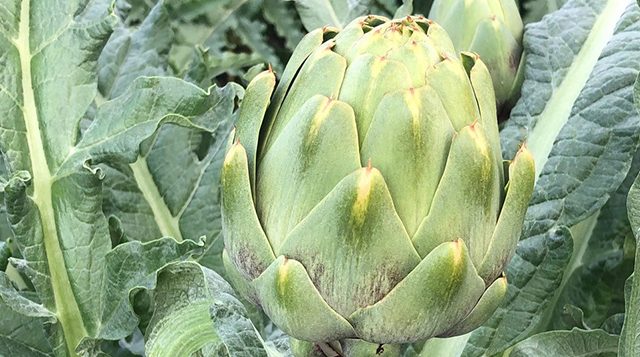
Cynarin
Found in:
artichokes
Possible benefits: Lowers cholesterol levels
Ellagic acid
Found in:
wine, grapes, currants, pecans, raspberries, strawberries, blackberries,
seeds
Possible benefits: reduces cancer risk; inhibits carcinogen binding to DNA; reduces
LDL cholesterol while increasing HDL cholesterol
Indoles
Found in:
cabbage, broccoli brussels sprouts, spinach, cauliflower, watercress,
turnip, kohlrabi, kale, rutabaga, horseradish, mustard greens
Possible benefits: reduced risk of hormone-related cancers; may
"inactivate" estrogen; inhibits growth of transformed cells
Isothiocyanates
Found in:
cabbage, cauliflower
Possible benefits: reduced risk of tobacco-induced tumors
Lignins
Found in:
high-fiber foods (especially seeds)
Possible benefits: reduced risk of colon cancer; reduced blood glucose and
cholesterol
Lycopene carotenoid
Found in:
tomatoes and tomato products, grapefruit, guava, apricots, watermelons
Possible benefits: antioxidant; reduces risk of prostate cancer; may reduce risk of
cardiovascular disease
Monterpene limonene
Found in:
citrus peel and membrane, mint, caraway, thyme, coriander
Possible benefits: antioxidant; reduced risk of skin and breast cancer; reduced
cholesterol production; reduced premenstrual symptoms
Phenolic acid
Found in:
cruciferous vegetables, eggplant, peppers, tomatoes, celery, parsley, soy,
licorice root, flaxseed, citrus, whole grains, berries
Possible benefits: fights cancer through of nitrosamine formation
Polyacetylene
Found in:
parsley, carrots, celery
Possible benefits: fights tobacco-induced tumors
Organosulfur compounds
Found in: garlic, onions, leeks, watercress, cruciferous vegetables
Possible benefits: reduced risk of gastric, colon and lung cancers, inhibited tumor
promotion; reduced cholesterol; lower blood pressure
Quercitin
Found in: pear and apple skins, peppers, kohlrabi, tomato leaves, onions, wine, grape
juice
Possible benefits: antioxidant, decreased platelet aggregation
Sulforaphane
Found in:
broccoli sprouts, broccoli, radish, horseradish, mustard greens
Possible benefits: Inhibit tobacco-related carcinogens from binding DNA
Community Supported Agriculture (CSA)
The following is an article written by Alan and Ruth Keitt, two of the organizers of PlowShares, a successful CSA in Gainesville, Florida.
We first
heard about Community Supported Agriculture at a celebration of the 80th birthday of
Father Thomas Berry. Tom Berry is a prophet, an environmental philosopher and cultural
historian whose writings (The Voice of the Earth, The Universe Story and
others ) remind us that the earth, as our primary provider and educator, is also our
primary responsibility. We were intrigued with the concept of CSA because it seemed to
address so many of our concerns. And yet we could not find a single one operating in our
area of north Florida. We visited Genesis Farm in northern New Jersey, founded by Tom
Berry's student, Sister Miriam Therese McGillis, a Dominican nun and educator. There we
saw a thriving CSA and were immediately hooked.
During the next two years we visited more CSAs
in Connecticut and Wisconsin to find out how they got started. We also talked several
times with the late Robyn Van En, founder of the first CSA in this country and godmother
of the CSA movement, who, along with Sister Miriam gave us advice and encouragement. We
began to spread the idea locally by giving talks (with a sign-up sheet at each one): at a
University series on sustainability, the Sierra Club, the Kanapaha Botanical Garden
Festival and our church. It was from those attendees who showed an interest that we formed
a core group and began to search for a location and, most importantly a farmer. It took
another year of meeting, searching, forming and reforming until we had a name (Plowshares)
and a stable committed core group of 7 individuals.
Ruth and I met our farmer, Rose Koenig, a local
organic grower, at a workshop sponsored by the Horticultural Sciences Department,
University of Florida. Rosie's Organic Farm had been in the business of raising vegetables
on 7 acres for wholesale and for local farmer's markets for three years. She was
interested in cutting back on wholesaling and concentrating on local markets so she was
interested in what we had to say. After a brief courtship we formed a partnership and
began to plan for our first growing season.
Our core group adopted the following operating
principle from the beginning. The primary job of the farmer is to farm. The primary job of
the core group is to support the farmer; this includes recruiting members, publicity,
handling finances, and organizing volunteers and events at the farm. In reality, while the
responsibilities are clear, farmer and members help each other out getting it all done.
Although we do not require members to work at the farm, Ruth and I help Rose with farm
work weekly along with several other regular volunteers. Our growing season runs from
September to late June, with our first pickup in early November. While Genesis Farm and
many other CSAs use intensive organic raised bed production, the sandy soils and
particular pests of northern Florida make more traditional row cropping using drip
irrigation more practical here. We have 70 memberships ($400/membership/year)representing
88 families for the coming season and have set 100 as the optimal number of memberships.
Last year we grew 35 different crops. Our distribution system uses two local farmers'
markets as pickup sites. The influx of our members on pickup days generates additional
sales for the other local vendors at these markets. We had our first intern, a returning
Peace Corps worker, for 3 months last spring,. We publish about 5 newsletters each year
with farm information and educational materials on food.
Wendell Berry has written in an essay entitled
Solving for Pattern, that a good solution solves more than one problem without
creating new ones. CSAs address many of the problems that I listed above and thus meet
Berry's test. First it seeks out and supports local farmers. By paying for the
harvest in advance it reduces both the financial risk and risk of a bad harvest which are
shared by the community. The food dollars are kept in the local economy. Next it provides
consumers with fresh organic vegetables which are unsurpassed as the basis for a healthy
diet. Another of Wendell Berry's criteria for a good solution is human scale - most CSA's
have between 30 and 200 members which allows reasonable participation in food decisions by
all members; yet they are large enough to avoid the waste in an individual garden.
Environmental health - careful organic production as practiced by our farmer is a
sustainable land use which maintains soil fertility. It avoids all potentially toxic
chemicals and their run off which is particularly important in the porous subsoil of
western Alachua County. It also reduces pollution by eliminating wasteful transportation
and packaging. Finally this bond between a farmer and a grateful community heals a split
( a synonym for making whole). It provides a spiritual dimension to the choice of our
food and educates us to the whole of the complex process by which our food passes from
field to table.
We are aware of the great diversity in needs
and motivations of both farmers and consumers in the diverse enterprise called CSA.
Plowshares has encountered many of the same problems that I hear from others on this path,
However our experience has led us to an essential ingredient for a CSA, not often
mentioned on the list servers dialogues, or media articles. That is - caring -, the mutual
respect and open dialogue between the farmer and the core group. Failure to nurture this
bond makes the whole endeavor ripe for burnout. We really work at it and it takes time to
develop. Finding the right core group or the right farmer is as difficult as finding a
mate. But I believe there is a natural affinity out there waiting to be joined. So, even
if he/she already has a spouse, the farmer needs a wife, and everyone needs a farmer.
Codex Alimentarius (International Food Code)
Back when the
Assyrians, Egyptians, Greeks and Romans first began selling their produce at camel caravan
stands, governing authorities, then as always, began to codify rules to protect consumers
from dishonest practices in the sale of food. During the Middle Ages, European countries
passed laws on the quality and safety of sausages, cheese, beer and wine.
Not to be outdone, in 1961 the Food and
Agricultural Organization (FAO) of the United Nations and the World Health Organization
(WHO) established the Codex Alimentarius (code for food as it travels through the
digestive tract) to create international food standards. Initial food standards on
sanitary and phytosanitary measures in international food trade have already been
developed as part of the Codex and have become benchmark standards.
The Codex Alimentarius Commission meets every
two years and include representatives from all over the world. General standards and
recommendations have for food hygiene, labeling, additives, contaminants, pesticide
residues, methods of analysis and sampling, dietary uses and nutrition, residues of
veterinary drugs in foods and food import/export inspection and certification systems.
Commodity Committees develop standards for specific classes of foods ranging from fats and
oils, fresh fruits and vegetables and soups and broths to natural mineral waters.
The Codex Committee on Food Hygiene recently
held a meeting in Washington D.C. to establish guidelines for agricultural best management
practices for production, harvesting and packing of fresh fruits and vegetables. Standards
are also being developed for pre-cut, raw vegetable products, currently a big seller in
supermarkets in the U.S.
At a late June meeting in Rome, the Codex
adopted new or revised Codex standards, guidelines and related texts including Guidelines
on the Production, Processing, Labelling and Marketing of Organically-Produced Foods.
These guidelines included regulations already in force in several countries and standards
applied by producer organizations. FAO/WHO estimates of 1997 organic food markets in the
European Community reached US$.4.5 billion and in the United States, US$4.2 billion, with
an anticipated annual growth rate between 20 and 25%.
Other topics included maximum residue limits
for Bovine Somatotropine (BST) - the cow hormone, food additives, quality and safety of
foods derived from biotechnology and interaction the Codex Commission with ngos. Check out
the Codex Alimentarius home page by typing "Codex Alimentarius" as a search
topic.
The Florida Agricultural
Museum, a non-profit corporation led by a board of thirty-five trustees in cooperation
with the Florida Department of Agriculture, has established a new 300 acre site in north
Flagler county near the intersection of Highway 1 and Interstate 95, 17 miles south of St.
Augustine. The chairman of the Board of Trustees is Robin Lauriault, a University of
Florida graduate (Ph.D., History) and a Putnam county citrus grower. The Director of the
museum is Bruce Piatek.
The museum will house and display artifacts collected from
Florida, including 19th century farm machinery, forestry tools, wagons, will
house a reference library and archives, and maintain herds of cracker cattle and horses.
Outdoor exhibits will include 1) The First Farmers, Native Timucuans, pre-European
cultures, 2) Spanish Colonial Agriculture, early 18th century, 3) Plantations
and Early Pioneers, 18th and 19th century, 4) Agricultural Towns at
the turn of the century 4) turn of the century Agricultural Towns 5) Agri-business in the
1940's.
Become part of this exciting, outdoor, educational project
by making a tax-deductible contribution to become a "farmhand" member, receive
the museums almanac newsletter, invitations to museum events and discounted
admission to special events. Most importantly, you will be building great museum that will
tell the story of Florida Agriculture.
For more information contact The Florida Agriculture
Museum; 1850 Princess Place Road; Palm Coast, Florida 32137; (904) 446-7630 (email:famuseum@pcfl.net).
January 8, 2000. Suwannee Valley Field and Greenhouse Grower's Short Course and Trade Show. 8:00 A.M. to 5:00 P.M. Suwannee County Coliseum, Live Oak, FL. Contact Person: Bob Hochmuth, Multi-County Extension Agent, Suwannee Valley Research and Education Center, 7580 County Road 136, Live Oak, FL 32060-7434, Phone: (904) 362-1725 or Suncom: 821-3050, Fax: (904) 362-3067. This short course will provide information on vegetable crops and other horticultural crops (herbs, fruits, cut flowers, and other specialty crops). Field and greenhouse culture and highlighted at this meeting. Plasticulture technologies covered include: plastic mulch culture, drip irrigation, row covers, environmental controls in a greenhouse, and hydroponics. The day long event includes an industry trade show and a tour of research and demonstration projects at the Suwannee Valley Research and Education Center. This is an excellent program for small farmers seeking information about alternative crops and production technologies including hydroponics.
January 21- 23, 2000. Southern Sustainable Agriculture Working Group (SAWG) - the Jekyll Island, Georgia Convention Center.
March 8-15, 2000. Independent Organic Inspectors Association Meeting, Annual Meeting, Florida Organic Growers and Consumers - Future Farmers of America (FFA) Leadership Training Center near Haines City.
April 1, 2000. Small Farm Conference and Trade Show - Volusia County Fair Grounds, Deland, Fl - Discussions and demonstrations on beekeeping, organic certification, cut foliage and flowers, plant tissue culture labs, fruit crops for small farms, small scale timber lots, electric and solar fencing, rabbit production and marketing, tropical fish farming, livestock marketing, pasture management and trade shows.