Vegetarian Newsletter
A
Vegetable Crops Extension Publication
University of
Florida
Institute of Food and
Agricultural Sciences
Cooperative Extension Service
Vegetarian 01-01
January 2001
List of Extension Vegetable Crops Specialists
| (Note: Anyone is free to use the information in this newsletter. Whenever possible, please give credit to the authors. The purpose of trade names in this publication is solely for the purpose of providing information and does not necessarily constitute a recommendation of the product.) |
| 2001 FL107 In-Services: Feb. 13: Strawberry in-service training. GCREC-Dover. Contact: John Duval. March 5-8: Florida Postharvest Industry Tour. Contact: Steve Sargent. April 23-25: Beneficials and Biorationals for Vegetable Pest Management. Contact: Susan Webb. |
Fertilizer Technology Update |
I recently wrote a report on fertilizer technology for Miami-Dade County Agricultural and Rural Land Retention Study. I like to present it to our Newsletter readers and hope you will find it somewhat useful.
Fertilizer technology is changing unceasingly every decade. These changes include new fertilizers and new application methods. I divided fertilizer technology into 7 groups: 1) dry granular fertilizers, 2) fertigation, 3) foliar fertilizers, 4) controlled/slow release fertilizers, 5) soil organic amendments, 6) mycorrhizae, and 7) magical/mysterious products. In the following section, each of these groups will be discussed in terms of their development and potential impact on crop production in south Florida.
Dry granular fertilizers:Dry granular fertilizer is still and will continue to be a major fertilizer source for crop production in Miami-Dade County. It is relatively inexpensive and always available from fertilizer distributors. Most large-scale growers have their own machinery for fertilizer application, while small-scale growers always get help from fertilizer distributors. Most growers have relatively more knowledge of this group of fertilizers than of any others. The changes of dry granular fertilizer technology will be 1) specific fertilizer for specific crops and 2) application technology. Special fertilizer such as "palm special", "lawn special", "tomato special", "lychee special", etc. will become progressively more available to growers. These special fertilizers are manufactured or mixed with distinct nutritional formulas to meet specific needs of the crop. However, variation between fields and between varieties should be considered also when selecting a special fertilizer. Another set of adjustments in the use of dry granular fertilizer involves application timing and rates. A recent fertilizer management survey for tropical fruit crops in south Florida showed that growers apply fertilizers 1-12 times per year for total amounts of 5 - 445 lb N/ac. These large variations indicate that it is necessary to optimize fertilizer application frequencies and rates.
Fertigation:
Fertigation is the application of liquid fertilizer through an irrigation system. The technology was developed in the 1970s and its adoption continues unabated to the present. Almost all tomato growers in Miami-Dade County use fertigation. Fertigation also has been used for other vegetable crops such as squash, eggplant, cucumber, etc. Our survey revealed that about 53% of tropical fruit growers are using either fertigation or soil drenches in their groves. Various innovations in fertigation equipment are being developed and marketed to growers. Research information is also more available though traditional publications and internet access. The advancement and progressive adoption of fertigation technology is certain to improve fertilizer use efficiency, overcome micronutrient deficiencies and reduce leaching of nutrients into groundwater.
Foliar fertilizers:
Foliar fertilizer technology came into use early in this century, but did not become common practice until the 1980s. This slow adoption was caused by the scarcity of fertilizer sources and appropriate application equipment. The application of foliar fertilizers is the quickest way to deliver nutrients to the tissues and organs of the crop. However, the plant leaf is structured in such a way that it naturally resists ready and reliable penetration of fertilizer salts. This is particularly true of N, P, and K. Research in Florida clearly shows that foliar application of N, P, and K does not result in consistent yield increases. Indeed some recent work has documented severe yield reductions with foliar nutrient sprays. On the other hand foliar application of micronutrients can be beneficial to correct certain nutrient deficiencies. However, a micronutrient formulation should be applied only when a specific deficiency has been clearly diagnosed. Based on over 30 years of experience with vegetable production in south Miami Dade County, Dr. Herbert H. Bryan concluded that only Fe and Mg foliar fertilizers effectively overcome corresponding micronutrient deficiencies of vegetable crops in this area.
Slow/controlled release fertilizers:
Slow release fertilizers are often interchangeably designated "delayed release", "controlled release" or "metered release" formulations. Such a formulation has a rate of dissolution (usually in water) much less than the rates for completely water-soluble compounds. Controlled/slow release fertilizer technology was developed in the 1960s, but became commercially available only in late 1970s and early 1980s. A recent fertilizer survey in Miami-Dade County showed that 18% tropical fruit growers use slow or controlled release fertilizer formulations. Price and availability of such formulations still restrict their use in traditional crop production. The quality of fertilizer is also of major concern. However, the development of new technologies for controlling nutrient release will lead to improvement in prices and quality of slow release fertilizer formulations.
Soil organic amendments:
Soil organic amendments usually consist of animal manures, cover crops, or composts. In many instances animal manures are the best source of organic matter. Indeed since the beginning of agriculture, animal manures have been used effectively for crop production. Animal manures supply significant quantities of essential plant nutrients and increase soil organic matter. However, availability, transportation costs, and regulations limit widespread use of animal wastes in crop production in Miami-Dade County. Cover crops, commonly referred as green manure, are also important soil organic amendments for sandy or gravelly soils in this area. Cover crops are used to improve soil physical properties, increase soil organic carbon, conserve soil water, reduce surface runoff, and recycle nutrients during the heavy summer rains. Sunn hemp (Crotalaria juncea L.), one of the new cover crops in south Florida, was found to produce 8.5 to 11.3 metric ton dry weight ha-1 and to fix or retain up to 270 kg N ha-1. A series of cover crop projects are currently in progress in Miami-Dade County. Composts have been increasing in popularity as soil organic amendments. Research has demonstrated that compost can serve as a soil amendment to increase organic matter, improve microbial activities in soils, provide nutrients, and ultimately improve plant growth and yield. However, composts are produced from various organic wastes and consequently, environmental concerns are always an issue in compost utilization. The potential often exists for heavy metals to accumulate in the soil and sometimes in the edible plant parts of vegetables and fruits. Yet, this is not as likely to occur in the County's calcareous soils as may occur in the acidic sandy soils further north. Nevertheless excessive nutrients or metals released from composts may be leached out of the root zone and into groundwater by irrigation or by rainfall. Other hazards such as human pathogens, viable weed seeds, and plant phytotoxicity should be considered when developing vegetable production systems with compost.
Mycorrhizae:
Mycorrhizae are certain soil fungi which for symbiotic associations with plant roots. These beneficial symbioses are ubiquitous in nature and almost all vascular plant species have some form of mycorrhizal association. Mycorrhizae were discovered in 1840, but were not studied extensively until the 1990s. Most research focused on the potential of mycorrhizal fungi to improve crop yields and to reduce the use of fertilizers. A recent experiment conducted in the Tropical Research and Education Center, University of Florida indicated that lychee plantlets derived from air-layers and inoculated with mycorrhizal fungi grow and develop much more rapidly than those which are not exposed to these beneficial symbionts. Many other scientists have reported significant functions of mycorrhizal fungi in crop production. However, such promising research results have not led to significant commercial utilization of mycorrhizae. Nevertheless, mycorrhizae are likely to play a very important role for crop nutrient management in the future.
Magical/mysterious products:
There are many magical/mysterious products, derisively known as "snake oils", marketed by various companies or individuals. These products are often referred to as biostimulants, soil supplements, soil conditioners, natural fertilizers, soil additives or growth activators. So far, few of them have demonstrated significant impact on crop production. Some of them have either no effects or negative effects on crop growth. Others are said to reveal their beneficial effects only under certain conditions of plant stress. However, I hope someday some products from this group will make significant contributions to crop nutrient management.
(Li, Vegetarian 01-01)
IRREC Lettuce Evaluation, Fall 2000 |
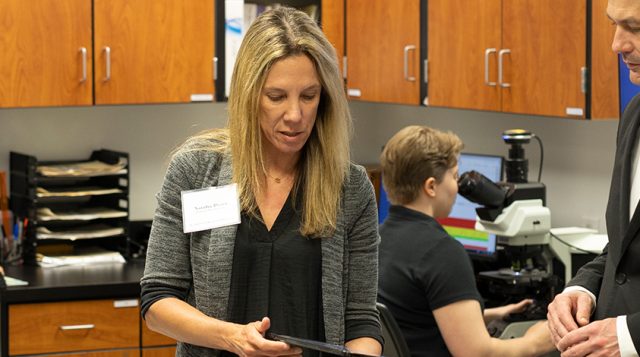
A replicated lettuce variety trial was conducted in the fall of 2000 in conjunction with the Commercial Production of Cool Season Vegetables class (Fig. 1). A wide variety of specialty lettuce cultivars are on the market for home and small-scale commercial production and are becoming popular in local restaurants and farmers' markets. The cultivars selected included a variety of leaf types (oakleaf, lollo, butterhead, iceberg, romaine) and leaf colors.

Fig. 1. Students evaluating lettuce variety trial at
Indian River Res. and Edu. Ctr.
Seeds were sown 8/30 in Fafard germination mix and germinated in a shade house. The trial was conducted in an Ankona fine sand. Beds were 44 inches wide and 8 inches high on 7 foot centers. Total fertilizer applied was approximately 160:160:160 N:P2O5:K2O/A with 25% broadcast and the remainder banded in the bed. Beds were covered with white on black plastic polyethylene mulch. Seepage irrigation was used.
Transplant date varied with development of the plants (Table 1). Plants were spaced 10 in. apart within rows, with 2 rows per bed and 12 in. between rows. Four replicates of each cultivar were planted with 10 plants per plot in each replicate (5 per row). Plants were scouted throughout the season and there was very little insect or disease pressure. Registered pesticides were applied as needed to control pests.
The 6 inner plants within each plot were harvested and average diameter and average head weight calculated (Table 1). Harvest dates were determined by observation.
| Table 1. | |||||||
Cultivar |
Type |
Color |
Source |
Days to |
Days to |
Average diametery
|
Average head weighty
|
Terlana |
Romaine |
Green |
Enza Zaden |
29 |
41 |
15.3 |
2.0 |
Leander |
Romaine |
Red |
Enza Zaden |
29 |
28 |
10.7 |
0.5 |
E16.2716 |
Romaine |
Green |
Enza Zaden |
42 |
40 |
12.0 |
1.4 |
E16.3228 |
Romaine |
Green |
Enza Zaden |
42 |
28 |
12.7 |
1.0 |
Green Forest |
Romaine |
Green |
Johnny's |
29 |
41 |
16.5 |
NAx |
Glossy Green |
Leaf |
Green |
Asgrow |
42 |
28 |
16.3 |
1.2 |
Tiara |
Leaf |
Green |
Asgrow |
42 |
28 |
16.7 |
1.0 |
Redina |
Leaf |
Red |
Johnny's |
50 |
32 |
12.0 |
0.3 |
Noisette |
Leaf |
Green |
Enza Zaden |
29 |
28 |
11.6 |
0.9 |
E15.2702 |
Leaf |
Red |
Enza Zaden |
42 |
28 |
13.6 |
0.6 |
E15.0622 |
Leaf |
Green |
Enza Zaden |
42 |
28 |
13.2 |
0.6 |
E15.5793 |
Leaf |
Green |
Enza Zaden |
42 |
28 |
13.5 |
0.5 |
Valencia |
Oakleaf |
Red |
Genecorp |
42 |
28 |
12.7 |
0.4 |
Royal Oak |
Oakleaf |
Green |
Johhny's |
42 |
28 |
11.6 |
0.4 |
Burpee Bibb |
Butterhead |
Green |
Burpee |
42 |
28 |
8.4 |
0.4 |
Optima |
Butterhead |
Green |
Johnny's |
29 |
28 |
12.9 |
1.1 |
Lollo Rosa |
Lollo |
Red |
Johnny's |
50 |
32 |
9.4 |
0.3 |
Crispino |
Iceberg |
Green |
Johnny's |
50 |
32 |
16.2 |
1.0 |
z Days from transplanting to harvestyAt harvest xInformation not available |
|||||||
Days to harvest were within expected values (Vegetable Production Guide for Florida - SP170) for all cultivars (70-95 days for iceberg, 60-80 days for all others). The transplant production period was longer than expected, especially for Redina (Fig. 2), Crispino and Lollo Rosa. Earlier than recommended planting dates and higher than optimum temperatures at planting may have slowed the initial growth of the transplants. Red colors are reported to fade under high temperature conditions but did not in this trial, particularly in the dark red Redina. Quality was high in all the cultivars although Terlana (Fig. 3) and Green Forest bolted quickly after reaching marketable size. Recommended cultivars from the quality evaluation by the class included Green Forest, Optima (Fig. 4), Royal Oak (Fig. 5), Valencia, Noisette and Redina.

Fig. 2. Redina

Fig. 3. Terlana

Fig. 4. Optima

Fig. 5. Royal Oak
(Lamb, Vegetarian 01-01)

Asian Vegetables for the Home Gardener |
The following vegetables are popular in gardens in Taiwan. Many are suitable for Florida gardens. The source is the Department of Horticulture, National Taiwan University (1988).
| Abalone mushroom Angled loofah Arrowhead Artichoke Asparagus Asparagus bean Asparagus lettuce Bakers garlic Balsam pear Bamboo shoot Bamboo sprout Basil Bean sprouts Beet Bell pepper Bitter melon Black salsify Bottle gourd Box-thorn Brake Broad bean Broccoli Brussels sprouts Bunching onion Butter bean Butterbur Cabbage Calabash gourd Cantaloupe Cape-gooseberry Cardoon Carrot Catjang Cauliflower Cedrus Celeriac Celery Celery cabbage Celtuce Ceylon spinach Chai Er Tsai Chard Chayote Chicory Chinese amaranth Chinese artichoke Chinese cabbage Chinese chive Chinese cress Chinese kale Chinese leek Chinese mahogany Chinese mallow Chinese matrimony vine Chinese mushroom Chinese mustard Chinese okra Chinese parsley Chinese radish Chinese water chestnut Chinese yam Chi Tsai Chive Christophine Cive Co-ba Collards Common white basella Coriander Cow pea Crown daisy Cucumber Dasheen Dishcloth gourd Davils tongue Daylily East Indian lotus Edible amaranth Edible burdock Eggplant Endive Fennel Fern Forest mushroom |
Four-angled bean French bean Fuki Garden cress Garden pea Garden strawberry Garland chrysanthemum Garlic Ginger Girasole Globe artichoke Goa bean Golden banded lily Gourd Great burdock Green onion Ground cherry Gumbo Gynura Honewort Honeydew melon Horse bean Horse radish Hot pepper Husk tomato Hyacinth bean Indian lotus Irish potato Jack bean Japanese honewort Japanese horse-radish Jelly fungus Jerusalem artichoke Jews ear Jicama Kale Kelp Kidney bean Kohlrabi Konjac Kuw-sun Lablab Ladys-finger Large-rooted mustard Leaf-beet Leaf mustard Leek Lettuce Lima bean Lily Love apple Luffa Malabar spinach Mallow Ma-Tai Matsutake Melon Melon pear Multiflora bean Mung bean sprout Mushroom Muskmelon Mustard Net bearing dictyophara New Zealand spinach Oca Okra Old world arrowhead Onion Oriental pickling melon Oyster mushroom Pak-choi Parsley Parsnip Pea Pepino Pepper Perilla Pe-tsai Pie-plant Pine mushroom Potato Pressed mustard Prickly pear |
Pumpkin Radish Rakkyo Rhubarb Rutabaga Salsify Scallion Scarlet runner bean Scorzonera Sea weeds Serpent gourd Sesame Shallot Shepherds purse Shiitake Snake gourd Snake melon Snap bean Snap pea Snow pea Soy bean Spinach Sponge gourd Sprouting broccoli Squash Strawberry Strawberry tomato Straw mushroom Sugar pea Swamp cabbage Swedish turnip Sweet basil Sweet corn Sweet pepper Sweet potate Swiss chard Swollen-stemmed mustard Sword bean Table beet Tampala Taro Tiger lily Tomatillo Tomato Trapa nut Tree tomato Tuna Turnip Turnip-rooted celery Tzu Tsai Upland Cress Vegetable mercury Vegetable oyster vegetable pear Vegetable soy bean Vegetable sponge Wasabi Water caltrops Water chestnut Water convolvulus Water cress Watermelon Water-shield Water spinach Wax gourd Welsh onion White cabbage White flowered gourd White gourd White jelly fungus White malabar-nightshade White mugwort White potato Winged bean Winter mushroom Witloof Yam Yam bean Yard-long bean |
(Stephens, Vegetarian 01-01)
Extension Vegetable Crops Specialists| Daniel J. Cantliffe Professor and Chairman, Horticultural Sciences Department |
Mark
A. Ritenour Assistant Professor, postharvest |
Timothy E. Crocker |
Ronald W. Rice Assistant Professor, nutrition |
| John Duval Assistant Professor, strawberry |
Steven A. Sargent Professor, postharvest |
| Chad Hutchinson Assistant Professor, vegetable production |
Eric Simonne Assistant Professor and Editor, vegetable nutrition |
| Elizabeth
M. Lamb Assistant Professor, production |
William M. Stall Professor, weed control |
| Yuncong Li Assistant Professor, soils |
James M. Stephens Professor, vegetable gardening |
| Donald N.
Maynard Professor, varieties |
Charles S. Vavrina Associate Professor, transplants |
| Stephen M. Olson Professor, small farms |
James M. White Associate Professor, organic farming |
FastCounter by LinkExchange
This page is maintained by Susie Futch.... if you have any questions or comments, contact me at