|

Horticultural
Sciences
Department
A Vegetable
Crops Extension
Publication
Archives
Events Calendar
Index
Related Links
_____________________
Anyone
is free to use
the information
in this
newsletter.
Whenever
possible, please
give credit to
the authors.
The purpose of
trade names in
this publication
is solely for
the purpose of
providing
information and
does not
necessarily
constitute a
recommendation
of the product.) |
| |
Vegetarian Newsletter
|
A Vegetable Crops Extension Publication
Vegetarian 01-11
November 2001 |
University of Florida
Institute of Food and Agricultural Sciences
Cooperative Extension Service |
(Note:
Anyone is free to use the information in this newsletter. Whenever possible, please give
credit to the authors.
The purpose of trade names in this publication is solely for the purpose of providing
information and does not necessarily constitute a recommendation of the product.) |
Print Version
EVENTS
CALENDER
COMMERCIAL
VEGETABLES
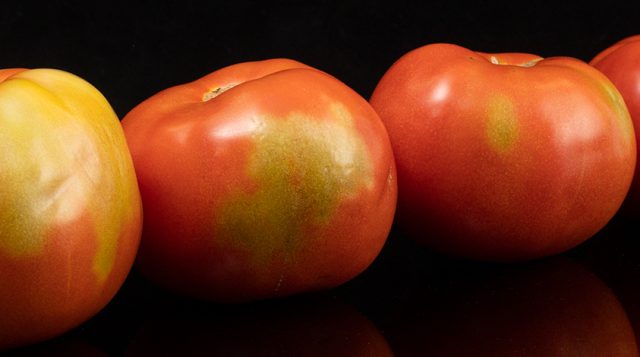
 Tomato Variety Trial, Spring 2001
Spring 2001 GCREC
Diploid Watermelon Variety Evaluation
 Spring 2001 GCREC Triploid
Watermelon Cultigen Evaluation
VEGETABLE GARDENING
No article this month
List of Extension Vegetable Crops Specialists

| 2002
Postharvest Horticulture Industry Tour - March 4-7, 2002. Visit postharvest operations
from harvest through shipping in central and southwest Florida. Special rates are
available for county and statewide faculty. Contact Steve Sargent (sasa@mail.ifas.ufl.edu, 352-392-1928, ext. 215)
or Mark Ritenour (mrit@gnv.ifas.ufl.edu,
561-467-3877). |
| Cucurbitaceae 2002 - December 8-12, 2002 - Naples
Beach and Golf Club, Naples, FL. Contact Donald N. Maynard at (941)751-7636 x239 or dnma@mail.ifas.ufl.edu. |
The University of Florida Cooperative Extension Service
The North Florida Research and Education Center Suwannee Valley, and
The Horticultural Sciences Department announces
The
Florida Drip Irrigation School: Managing Water and Nutrients In Vegetable Production
November 13, 2001 8:15 am to 4:00 pm
North Florida Research and Education Center Suwannee Valley
Live Oak, FL
With increased emphasis in water and nutrient management in vegetable
production and continuous need to increase profitability, vegetable growers need to be
aware of the latest tools and technology available to optimize water and nutrient
management with drip irrigation.
Through classroom teaching and field
demonstrations, the goal of this daylong educational program is to provide an update on
the principles and practices of efficient water and nutrient management in drip-irrigated
vegetable crops. Topics will include trouble-shooting irrigation system problems,
irrigation scheduling, fertigation management, and drip system maintenance. Participation
in this program will be sanctioned by a certificate of attendance.
This program is offered at no charge, but
requires pre-registration. A Sponsored lunch will be provided. If you plan to participate,
please notify Bob Hochmuth at the North Florida REC Suwannee Valley
at (386) 362-1725. (Attendance will be limited to 20 participants).
The program will be informal so everyone can
relax and learn. No coats and ties will be allowed in the door. It will include a mix of
hands-on demonstrations in the field, hands-on classroom activities, and classroom
presentations and discussion. The activities will include the following:
Hands-on Activities
* Injection of blue dye to see wetting
patterns at various lengths of time.
* Determining soil water tension using various devices (Watermarks, TDR, and
tensiometers).
* Measuring free chlorine movement in the drip line for cleaning.
* Proper back flow prevention set-up.
* Experiences with various filtration methods for drip systems.
* Checking for fertilizer compatibility and mixing.
* Determination of system uniformity.
* Assembly of drip irrigation components.
* Results of using drip tape for fumigant delivery.
Presentations and Discussion Topics
* Trouble shooting system design problems.
* Basics of drip
irrigation scheduling.
* Maintenance of
drip systems.
* Principles of
nutrient management with drip irrigation.
* Role of drip
irrigation in future nutrient BMP program.
* Microbial activity
in irrigation water. |
Tomatoes were grown on almost 36,000 acres in the 2000-2001 season and valued more
than $490 million making tomatoes the number one vegetable crop in Florida. The objective
of this trial was to evaluate the performance of tomato varieties under north Florida
spring conditions.
Thirty-two entries were seeded on 2 Feb 2001 into 2 inch Todd planter flats. Soil
type was an Orangeburg loamy fine sand. Production system was full bed polyethylene mulch
system with drip irrigation. Beds were fumigated with methyl bromide/cloropicrin
mixture(67/33) at 350 lbs/a before mulch was laid. Total fertilization was 195-60-195
lbs/a of N-P2O5 -K2O. Between row spacing was 6 feet and
in-row spacing was 20 inches. Plot length was 20 feet. Design was a randomized complete
block with 4 replications. Tomatoes were transplanted into the field on 28 March 2001.
Plants were staked and tied 4 times. Pruning consisted of removing ground suckers plus two
more. Registered pesticides were applied as needed. Fruit were harvested at or beyond the
mature green stage on 19 June and 2 July. Fruit were separated into marketable and
unmarketable and weighed. Marketable fruit were separated into medium, large and
extra-large sizes by belts and weighed and counted.
Results
Total yield ranged from a low of 719 boxes/a for ASX 225R to a high of
2475 boxes/a for BHN 543' (Table 1). Twenty four other entries
produced similar yields to BHN 543'. Yields were much higher overall in 2001 than in
2000 due to the absence of Tomato Spotted Wilt disease in the 2001 season. Growing
conditions were also excellent and very little insect and disease pressure was present.
Yields of extra-large fruit ranged from a low of 379 boxes/a for ASX
225R to a high of 2129 boxes/a for BHN 543'. Eight other entries had
extra-large yields similar to BHN 543'. The largest fruit was produced by BHN
543' at 8.0 oz and smallest by ASX 124R at 5.8 oz. Marketable fruit ranged
from a high of 83.1 % for FL 91' to a low of 46.6 % for ASX 225R.
Table 1. Tomato
variety results spring 2001, NFREC, Quincy. |
Entry |
Source |
Marketable yield
(25 lb cartons/a) |
Marketable fruit (%) |
Average fruit wt (oz) |
| |
|
Large |
Extra large |
Total |
|
|
BHN 543 |
BHN Research |
283 i-m z |
2129 a |
2475 a |
71.8 b-e |
8.0 a |
BHN 575 |
BHN Research |
621 b |
1585 b-e |
2358 ab |
82.5 a |
6.5 h-j |
Fla. 7973 |
GCREC |
379 f-l |
1877 a-c |
2350 ab |
80.4 ab |
7.3 b-g |
FL 91 |
Seminis |
326 i-m |
1969 ab |
2339 ab |
83.1 a |
7.4 a-f |
RFT 0417 |
Sygenta |
361 g-m |
1874 a-c |
2326 ab |
83.0 a |
7.4 a-f |
Fla. 7943 |
GCREC |
505 b-h |
1747 a-c |
2322 ab |
80.4 ab |
7.1 b-h |
BHN 444 |
BHN Research |
591 bc |
1592 b-e |
2315 ab |
73.0 a-d |
6.6 g-i |
BHN 555 |
BHN Research |
355 g-m |
1893 a-c |
2304 ab |
74.5 a-d |
7.5 a-e |
BHN 446 |
BHN Research |
908 a |
1032 f |
2282 a-c |
77.3 a-c |
5.9 jk |
Floralina |
Seminis |
580 b-d |
1508 b-f |
2228 a-c |
79.2 a-c |
6.8 e-i |
Rockstar |
Seminis |
565 b-e |
1568 b-e |
2213 a-c |
77.8 a-c |
6.9 d-i |
BHN 442 |
BHN Research |
522 b-g |
1603 b-e |
2208 a-c |
80.8 ab |
6.9 d-i |
BHN 577 |
BHN Research |
545 b-f |
1468 b-f |
2181 a-c |
75.7 a-d |
6.5 h-j |
BHN 466 |
BHN Research |
777 a |
1182 ef |
2161 a-d |
74.5 a-d |
6.2 i-k |
RFT 0418 |
Syngenta |
388 f-l |
1692 a-e |
2143 a-d |
77.0 a-d |
7.4 a-f |
Fla. 7816 |
GCREC |
446 c-i |
1617 b-e |
2120 a-d |
75.9 a-d |
7.3 b-g |
Fla. 7964 |
GCREC |
457 b-i |
1568 b-e |
2117 a-d |
71.6 b-e |
6.9 d-i |
Agriset 761 |
Agrisales |
419 d-j |
1580 b-e |
2091 a-d |
71.2 b-e |
6.7 f-i |
XP 1405037 |
Seminis |
441 c-j |
1542 b-e |
2059 a-d |
81.2 ab |
6.9 d-i |
Sanibel |
Seminis |
290 i-m |
1734 a-d |
2058 a-d |
75.6 a-d |
7.7 a-c |
*FL 47 |
Seminis |
388 f-l |
1560 b-e |
2058 a-d |
80.5 ab |
7.0 c-h |
HA 3026 |
Hazera |
313 i-m |
1668 a-e |
2037 a-d |
75.4 a-d |
7.5 a-e |
HA 3027 |
Hazera |
243 k-m |
1720 a-d |
2004 a-d |
74.1 a-d |
8.0 a |
Solar Set |
Seminis |
456 b-i |
1442 c-f |
1986 a-d |
69.1 c-f |
6.9 d-i |
RFT 0849 |
Syngenta |
398 e-k |
1485 b-f |
1944 a-d |
72.8 a-e |
6.9 d-i |
PS 150535 |
Seminis |
203 m |
1655 a-e |
1877 b-e |
73.2 a-e |
7.8 ab |
HA 3028 |
Hazera |
268 j-m |
1415 c-f |
1752 c-e |
66.9 d-f |
7.6 a-d |
RFT 6153 |
Syngenta |
346 h-m |
1223 d-f |
1636 de |
78.3 a-c |
6.9 d-i |
RFT 0190 |
Syngenta |
220 lm |
1180 ef |
1438 ef |
63.1 e-g |
7.2 b-h |
ASX 124R |
ARI |
377 f-l |
446 g |
1027 fg |
56.2 g |
5.8 k |
ASX 131R |
ARI |
338 h-m |
502 g |
1015 fg |
60.0 fg |
5.9 jk |
ASX 225R |
ARI |
234 k-m |
397 g |
719 g |
46.6 h |
6.2 i-k |
Z Mean separation
in columns by Duncans Multiple Range Test, 5% level. |
(Olson - Vegetarian 01-11)
Spring 2001 GCREC Diploid Watermelon
Variety Evaluation |
Diploid (seeded) watermelons generally weigh from 18 to 35 lb each and
represent most of the commercial crop grown in Florida. Icebox watermelons weigh 6 to 12
lb each and are grown on a very small acreage. Triploid (seedless) watermelons usually
weigh 12 to 18 lb and are grown in Florida on perhaps 30% of the acreage. Florida produced
8.6 million cwt of watermelons of all types from 27,000 harvested acres in 1999-2000,
which provided an average yield of 320 cwt/acre. The average price was $5.25/cwt resulting
in a crop value of over $45 million which accounted for 3.0% of the gross value of the
states vegetable crops.
Allsweet and blocky Crimson Sweet types are the
most commonly grown diploid watermelons in Florida. Hybrids have replaced open-pollinated
varieties in most production areas of the state. The purpose of this trial was to evaluate
some of the recently introduced commercial varieties and experimental lines of the blocky
Crimson Sweet and Allsweet types.
The EauGallie fine sand at the Gulf Coast Research and Education Center
(GCREC) was prepared in late January by incorporation of 0-0.8-0 lb N-P2O5-K2O
per 100 linear bed feet (lbf). Beds were formed and fumigated with methyl
bromide:chloropicrin, 67:33 at 2.3 lb/100 lbf. Banded fertilizer was applied in shallow
grooves on bed shoulders at 3.1-0-4.3 lb N-P2O5-K2O/100
lbf after the beds were pressed and before application of the black polyethylene mulch.
Total fertilizer applied was equivalent to 148-40-206 lb N-P2O5-K2O/acre.
The final beds were 32-in. wide and 8-in. high and were spaced on 9-ft centers, with four
beds between seepage irrigation/drainage ditches which were on 41-ft centers. The diploid
watermelons were planted in rows adjacent to the ditches and also served as pollenizers
for triploid watermelons that were being evaluated in the two center beds of each land.
Watermelon seeds were planted on 19 February in holes punched in the
polyethylene mulch at 3-ft in-row spacing. Seedlings were thinned at the two true-leaf
stage to one per hole. Twenty-seven entries were included in the trial. The 30-ft long
plots had ten plants each and were replicated three times in a randomized complete-block
design. Weed control in row middles was accomplished by cultivation and application of
paraquat. Plant stands recorded just before vines grew together showed no significant
difference among plots. Pesticides were applied as needed for control of silverleaf
whitefly (endosulfan), gummy stem blight (chlorothalonil, azoxystrobin, mefenoxam, maneb,
and thiophanate-methyl), and lepidopterous larvae (Bacillus thuringiensis, spinosad
and esfenvalerate).
Watermelons were harvested during the 24-30 May and 6-12 June periods.
Marketable fruit (U.S. No. 1 or better) according to the U.S. Standards for Grades of
Watermelons were separated from culls and counted and weighed individually. Fruit 12 lbs
and larger were assumed to be marketable. Soluble solids (a measure of sweetness)
determinations were made with a digital, hand-held refractometer on six fruit of each
entry at each harvest, polar and equatorial dimensions were obtained and the incidence of
hollowheart was recorded for these fruits.
Early yields, based on the first of two harvests, ranged from 68
cwt/acre for Starbrite to 764 for Summer Flavor 790 (Table 1).
Ten other entries had early yields similar to those of Summer Flavor 790.
Average fruit weight ranged from 20.6 lbs for Montreal to 34.2 lbs for XWD
98210.
Total yields (Table 1) varied from 489 cwt/acre
for SWD 8307 to 973 cwt/acre for Summer Flavor 790. Seventeen other entries
had yields similar to those of Summer Flavor 790. Average fruit weight over
the entire season ranged from 20.3 lbs for Montreal to 32.7 lbs for XWD 98210.
Fruit per plant varied from 1.4 for Margarita and XWD 98210 to 2.8 for
Summer Flavor 790. Soluble solids concentrations ranged from 11.0% for W X 24
to 13.2% for Sentinel. Seasonal average soluble solids for all entries
exceeded the 10% specified for optional use to designate very good internal quality in the
U.S. Standards for Grades of Watermelons. The incidence of hollowheart in those fruit
sampled varied from none in seven entries to 63% in Starbrite.
Watermelon variety evaluations have been conducted at this location
each spring season since 1991. The highest yields ranged from 439 cwt/acre in 1996 to 1026
cwt/acre in 1993. In spring 2001, the highest yield was 973 cwt/ acre which was
considerably greater than the 10-year average yield of 762 cwt/acre.
Based on this and previous trials, the following Allsweet
and blocky Crimson Sweet type varieties are expected to perform well in
Florida: Big Stripe (for trial), Celebration, Fiesta,
Mardi Gras, Regency, Royal Star, Royal
Sweet, Sentinel, Starbrite, Stars-N-Stripes, and
Summer Flavor 790, 800, and 900 series. Other varieties may perform equally well on some
farms.
A complete report of this trial is available from the author at dnma@mail.ifas.ufl.edu
Table 1. Early and total yields, average fruit weight, fruit per plant,
percentages of cull fruit, soluble solids and the incidence and severity of hollowheart of
diploid watermelons. Gulf Coast Research and Education Center, Bradenton. Spring 2001. |
Entry |
Source |
Early Harvest1 |
Total Harvest |
Weight (cwt/A)2 |
Avg Fruit Wt (lb) |
Weight (cwt/A)1 |
Avg Fruit Wt (lb) |
Fruit per Plant |
Cull (%)4 |
Soluble Solids
(%) |
Hollowheart |
(%) |
(in.)3 |
Summer Flavor 790 |
Abbott & Cobb |
764 a5 |
24.0 b-e |
973 a |
23.8 b-f |
2.8 a |
12 a-e |
12.1 a-d |
0 c |
0.0 d |
Starbrite |
Seminis |
68 i |
25.2 b-e |
882 ab |
25.5 b-d |
2.1 a-c |
15 a-d |
12.9 ab |
63 a |
0.6 a-c |
RWM 8036 |
Syngenta |
624 ab |
25.8 b-e |
845 a-c |
25.0 b-e |
2.2 a-c |
10 a-e |
11.4 b-d |
17 a-c |
0.1 b-d |
SWD 7201 |
Sakata |
420 b-h |
28.5 b |
821 a-c |
26.8 bc |
2.0 bc |
7 a-e |
12.0 a-d |
17 a-c |
0.1 b-d |
Royal Star |
Seminis |
438 b-g |
26.4 b-d |
819 a-c |
26.7 bc |
2.0 bc |
4 c-e |
11.3 cd |
20 a-c |
0.2 b-d |
XWD 98212 |
Sakata |
536 a-d |
27.1 bc |
814 a-c |
25.5 b-d |
2.0 a-c |
11 a-e |
12.7 a-c |
25 a-c |
0.2 b-d |
RWM 8114 |
Syngenta |
313 c-i |
24.6 b-e |
805 a-c |
23.0 c-f |
2.2 a-c |
11 a-e |
11.5 b-d |
20 a-c |
0.3 b-d |
Big Stripe |
Willhite |
150 g-i |
24.7 b-e |
772 a-d |
26.8 bc |
1.8 bc |
4 c-e |
12.1 a-d |
50 ab |
0.7 ab |
Sweetheart |
Willhite |
247 d-i |
26.5 b-d |
750 a-d |
27.2 b |
1.8 bc |
5 b-e |
12.3 a-d |
60 a |
0.5 a-d |
Royal Sweet |
Seminis |
139 hi |
26.4 b-d |
747 a-d |
25.7 b-d |
1.8 bc |
3 de |
12.1 a-d |
38 a-c |
0.2 b-d |
Fiesta |
Syngenta |
559 a-c |
21.1 de |
718 a-d |
20.6 f |
2.2 ab |
13 a-e |
11.8 a-d |
8 bc |
0.1 dc |
Mardi Gras |
Syngenta |
558 a-c |
21.9 c-e |
714 a-d |
21.2 ef |
2.1 a-c |
4 c-e |
11.8 a-d |
0 c |
0.0 d |
Sentinel |
Seminis |
587 a-c |
24.4 b-e |
708 a-d |
24.0 b-f |
2.0 bc |
9 a-e |
13.2 a |
20 a-c |
0.2 b-d |
XWD 98210 |
Sakata |
621 ab |
34.2 a |
702 a-d |
32.7 a |
1.4 bc |
10 a-e |
12.0 a-d |
0 c |
0.0 d |
RWM 8110 |
Syngneta |
618 ab |
22.2 c-e |
693 a-d |
22.0 d-f |
2.1 a-c |
3 de |
12.5 a-c |
0 c |
0.0 d |
Regency |
Seminis |
380 b-h |
23.7 b-e |
689 a-d |
22.0 d-f |
2.0 a-c |
1 e |
11.4 b-d |
13 bc |
0.1 dc |
Legacy |
Willhite |
443 b-g |
25.9 b-e |
678 a-d |
25.8 b-d |
1.8 bc |
7 a-e |
11.7 a-d |
40 a-c |
0.3 a-d |
Festival |
Willhite |
515 a-e |
24.5 b-e |
674 a-d |
24.7 b-e |
1.8 bc |
8 a-e |
11.8 a-d |
25 a-c |
0.3 b-d |
Sangria |
Syngenta |
424 b-h |
22.6 c-e |
659 b-d |
21.9 d-f |
1.9 bc |
19 a |
12.4 a-d |
17 a-c |
0.1 b-d |
Piñata |
Willhite |
185 f-i |
26.6 b-d |
653 b-d |
21.8 d-f |
1.8 bc |
9 a-e |
11.9 a-d |
42 a-c |
0.9 a |
W X 24 |
Willhite |
135 hi5 |
24.0 b-e |
644 b-d |
25.5 b-d |
1.7 bc |
13 a-e |
11.0 d |
50 ab |
0.7 a-c |
Falcon |
Seminis |
544 a-c |
23.2 b-e |
630 b-d |
22.2 d-f |
1.8 bc |
10 a-e |
12.5 a-d |
0 c |
0.0 d |
Celebration |
Syngenta |
504 a-e |
24.9 b-c |
619 b-d |
23.7 b-f |
1.7 bc |
13 a-e |
11.7 a-d |
25 a-c |
0.6 a-d |
Montreal |
Sunseeds |
467 b-f |
20.6 e |
609 b-d |
20.3 f |
2.0 bc |
7 a-e |
12.3 a-d |
20 a-c |
0.2 b-d |
W X 190 |
Willhite |
230 e-i |
23.7 b-e |
562 cd |
22.3 d-f |
1.6 bc |
16 a-c |
11.6 b-d |
0 c |
0.0 d |
Margarita |
Wilhite |
409 b-h |
26.1 b-d |
557 cd |
25.8 b-d |
1.4 c |
12 a-e |
12.0 a-d |
33 a-c |
0.3 c-d |
SWD 8307 |
Sakata |
402 b-h |
22.4 c-e |
489 d |
22.2 d-f |
1.6 bc |
17 ab |
11.2 cd |
0 c |
0.0 d |
1 First
of two harvests.
2Acre = 4840 lbf.
3Average flesh separation of those fruit sampled with hollowheart.
4By weight.
5Mean separation in columns by Duncans multiple range test, 5% level. |
Spring 2001
GCREC Triploid Watermelon Cultigen Evaluation |
The concept of triploid (seedless) watermelons was
first described in the U.S. literature by Kihara in 1951 based on experimentation that
began in 1939 in Japan. Seed for planting seedless watermelons results from a cross
between a tetraploid female parent, developed by treating diploid lines with colchicine or
by other means, and a diploid (normal) male parent. The resulting triploid plants are
sterile and do not produce viable seed. However, small, rudimentary seeds develop which
are eaten along with the flesh just as immature seeds are eaten in cucumber.
Fruit enlargement in seeded fruit, including
watermelon, is enhanced by growth-promoting hormones produced by the developing seed.
Growth hormones are lacking in seedless watermelons so those agents must be provided by
pollen. Since flowers of triploid plants lack sufficient viable pollen to induce normal
fruit set, diploid seeded watermelons are interplanted with triploids to serve as
pollenizers. An adequate bee population is necessary to insure that sufficient transfer of
pollen occurs. Seedless fruit (from triploid plants) tend to be triangular shaped without
sufficient pollination.
Although the procedure for production of seedless
watermelons has been known for about 50 years and commercial varieties have been available
for many years, the interest in and acreage of seedless watermelons has remained small in
Florida until recently. Erratic performance, poor seed germination, high seed costs, and
inadequate varieties resulted in lack of interest in seedless watermelon production in the
past, but most of the deterents have now been overcome. It is estimated that seedless
watermelons now represent about 30% of the total production in Florida.
The objective of this trial was to evaluate the
performance of triploid watermelon cultigens under west-central Florida conditions.
Seeds of 37 triploid watermelon varieties or
experimental hybrids (Table 1) were planted in a peat-lite growing
mix in planter flats (1 ¼ x 1 ¼ x 2 ¼ in. cells) on 23 January. The watermelon
transplants were grown by a commercial plant grower.
The EauGallie fine sand was prepared in late January
by incorporation of 0-0.8-0 lb N-P2O5-K2O per 100 linear
bed feet (lbf). Beds were formed and fumigated with methylbromide:chloropicrin, 67:33 at
2.3 lb/100 lbf. Banded fertilizer was applied in shallow grooves on the bed shoulders at
3.1-0-4.3 lb N-P2O5-K2O/100 lbf after the beds were
pressed and before the black polyethylene mulch was applied. The total fertilizer applied
was equivalent to 150-40-208 lb N-P2O5-K2O/A. The final
beds were 32-in. wide and 8-in. high, and were spaced on 9-ft centers with four beds
between seepage irrigation/drainage ditches, which were on 41-ft centers.
The transplants were set in holes punched in the
polyethylene mulch at 3-ft in-row spacing on 26 February. The replicated plots were 27 ft
long and had nine plants each and were repeated three times in a randomized, complete
block design. Diploid watermelons that were being evaluated were direct seeded in beds on
each side of two triploid watermelon beds on 19 February to serve as diploid pollenizers.
Plant stands recorded just before vines grew together showed no significant differences
among plots. Weed control in row middles was by cultivation and applications of paraquat.
Pesticides were applied as needed for control of silverleaf whitefly (endosulfan), gummy
stem blight (chlorothalonil, azoxystrobin, mefenoxam, maneb, and thiophanate-methyl), and
lepidopterous larvae (Bacillus thuringiensis, spinosad, and esfenvalerate).
Watermelons were harvested during the 24-30 May and
6-12 June periods. Marketable (U.S. No.1 or better) fruit according to U.S. Standards for
Grades of Watermelons were separated from culls and counted and weighed individually.
Fruit 10 lbs and larger were assumed to be marketable. Tetraploid fruit, where they
occurred, were not included in the marketable category because they are not seedless. At
least six fruit from each entry at each harvest were used to determine soluble solids (a
measure of sweetness) with a digital, hand-held refractometer, polar and equatorial
dimensions, rind thickness, flesh color, and the incidence and severity of hollowheart
were noted.
Early yield, as represented by the first of two
harvests, varied from 95 cwt/acre for Hazera 103 to 550 cwt/acre for
Millionaire (Table 1). Nineteen other entries had yields
similar to those of Millionaire. Average fruit weights at the first harvest
ranged from 13.9 lbs for Imagination to 21.7 lbs for Seedway 4502.
Total yields (Table 1) ranged
from 567 cwt/acre for Revolution to 1149 cwt/acre for Millionaire.
Twenty-three other entries produced yields significantly similar to those of
Millionaire. Average fruit weight for the entire season varied from 14.5 lbs
for Imagination to 21.7 lbs Revolution. The number of fruit per
plant ranged from 1.7 for Revolution to 4.3 for Millionaire.
Soluble solids concentrations varied from 12.0% for Seedway 4502 to 14.1% for ZG-8820.
Accordingly, soluble solids in all entries far exceeded the 10% specified for optional use
in the U.S. Standards for Grades of Watermelons to describe very good internal quality.
The incidence of hollowheart in the fruit sampled ranged from 0% in Super Seedless
7177, Tri-X Palomar, Trillion and Super Seedless
7187 to 58% in Triple Crown. Tetraploid plants were noted in several
entries. The total number of tetraploid fruit produced follow: Cooperstown
(6), Fandango (3), Genesis (2), HMX 8914 (5), Seedway 4502 (5),
Sugar Shack (9), Sugar Time (1), SWT 9708 (2). These fruit could
not be sold as seedless watermelons so they were not included in the marketable yields.
Seedless watermelon variety trials have been
conducted at this location each spring season since 1988. The highest yields ranged from
507 cwt/acre in 1996 to 1186 cwt/A in 1999. In spring 2001, 1149 cwt/acre was the highest
yield which greatly exceeded the 844 cwt/acre average high yield during the entire period.
Based on results of this and previous trials,
triploid hybrids, in alphabetical order, that should perform well in Florida include
Freedom, Genesis, Millionaire, Revere,
Sugar Shack (for trial), Sugar Time (for trial), Super
Seedless 7177 (for trial), Summersweet 5244, Summersweet
5544, Tri-X 313, Tri-X Carousel, Tri-X Palomar,
and Tri-X Shadow. Triton, a yellow-flesh variety should be
evaluated for that niche market. Other varieties may perform well on individual farms.
A complete report of this trial can be obtained from
the author at dnma@mail.ifas.ufl.edu
Table 1. Early
and total yields, average fruit weight, fruit per plant, percentage of
cull fruit, soluble solids and the incidence and severity of hollowheart of triploid
watermelons. Gulf Coast Research and Education Center, Bradenton. Spring 2001. |
|
Entry |
Source |
Early Harvest |
Total Harvest |
Weight (cwt/A)1 |
Avg Fruit Wt (lb) |
Weight (cwt/A)1 |
Avg Fruit Wt (lb) |
Fruit per Plant |
Cull (%)3 |
Soluble Solids
(%) |
Hollowheart |
(%) |
(in.)2 |
Millionaire |
Harris Moran |
550 a4 |
18.6 a-f |
1149 a |
18.2 c-l |
4.3 a |
7 bc |
13.1 a-d |
8 bc |
0.1 cd |
Hazera 1032 |
Hazera |
241 c-g |
18.8 a-f |
1140 ab |
20.7 ab |
3.7 a-c |
10 bc |
13.1 a-d |
38 a-c |
0.7 a-d |
SWT 8705 |
Sakata |
389 a-e |
18.8 a-f |
1098 a-c |
18.1 c-l |
3.9 ab |
2 c |
13.0 a-d |
33 a-c |
0.6 a-d |
Sweetheart |
Zeraim Gedera |
394 a-e |
18.4 a-f |
1072 a-d |
17.8 d-m |
3.8 a-c |
6 bc |
13.0 a-d |
8 bc |
0.1 b-d |
Tri-X 313 |
Syngenta |
299 b-g |
18.6 a-f |
988 a-e |
18.1 c-l |
3.4 a-e |
10 bc |
13.0 a-d |
8 bc |
0.1 cd |
Super Seedless 7177 |
Abbott & Cobb |
508 ab |
17.1 b-g |
981 a-e |
17.2 e-m |
3.6 a-d |
5 bc |
13.0 a-d |
0 c |
0.0 d |
YS00-5003 |
Hazera |
270 c-g |
19.0 a-f |
956 a-e |
20.2 a-c |
2.9 b-e |
10 bc |
12.9 a-d |
42 a-c |
0.9 ab |
ZG-8820 |
Zeraim Gedera |
316 b-g |
17.3 b-g |
941 a-e |
16.5 i-n |
3.7 a-c |
8 bc |
14.1 a |
25 a-c |
0.3 b-d |
Tri-X Palomar |
Syngenta |
346 a-f |
16.3 d-g |
927 a-f |
15.8 l-n |
3.6 a-c |
10 bc |
13.4 a-c |
0 c |
0.0 d |
Sugar Shack |
Sugar Creek |
281 b-g |
20.3 ab |
920 a-f |
19.3 b-g |
3.2 a-e |
9 bc |
13.2 a-d |
10 bc |
0.1 cd |
Sugar Time |
Sugar Creek |
439 a-d |
16.7 c-g |
916 a-f |
16.4 i-n |
3.4 a-e |
9 bc |
12.6 b-d |
17 a-c |
0.2 b-d |
Gem Dandy |
Willhite |
326 a-g |
15.8 fg |
906 a-f |
16.6 h-n |
3.4 a-e |
11 bc |
12.8 b-d |
10 bc |
0.5 a-d |
XWT 8706 |
Sakata |
414 a-e |
20.3 a |
905 a-f |
19.0 b-h |
3.1 a-e |
6 bc |
12.8 b-d |
17 a-c |
0.1 b-d |
Crispy Sweet |
Zeraim Gedera |
403 a-e |
16.8 c-g |
894 a-f |
16.9 g-n |
3.3 a-e |
4 bc |
13.4 a-c |
17 a-c |
0.1 b-d |
Trillion |
Abbott & Cobb |
238 c-g |
15.9 fg |
880 a-f |
16.5 i-n |
3.3 a-e |
8 bc |
12.4 b-d |
0 c |
0.0 d |
SWT 6703 |
Sakata |
264 c-g |
16.3 d-g |
875 a-f |
16.7 h-n |
3.3 a-e |
9 bc |
13.0 a-d |
10 bc |
0.1 cd |
HMX 8914 |
Harris Moran |
449 a-d |
18.1 b-f |
866 a-f |
17.4 e-m |
3.2 a-e |
16 a-c |
13.3 a-c |
17 a-c |
0.1 b-d |
YS00-6003 |
Hazera |
100 g |
19.6 a-e |
853 a-f |
19.4 b-f |
2.9 b-f |
6 bc |
12.4 b-d |
50 ab |
1.1 a |
Hazera 5005 |
Hazera |
148 fg |
19.2 a-f |
846 a-f |
19.4 b-e |
2.7 b-f |
6 bc |
13.0 a-d |
40 a-c |
0.9 a-c |
W X 55 |
Willhite |
199 e-g |
16.3 d-g |
845 a-f |
16.1 j-n |
3.3 a-d |
8 bc |
13.4 a-c |
17 a-c |
0.3 a-d |
Sunday Special |
Hazera |
509 ab4 |
16.2 d-g |
843 a-f |
16.0 k-n |
3.3 a-e |
15 a-c |
12.3 cd |
8 bc |
0.1 b-d |
RWT 8096 |
Syngenta |
345 a-f |
18.3 a-f |
841 a-f |
18.8 b-i |
2.8 b-f |
6 bc |
12.4 b-d |
10 bc |
0.5 a-d |
SWT 9708 |
Sakata |
347 a-f |
17.1 b-g |
829 a-f |
18.5 b-j |
3.0 b-e |
9 bc |
13.3 a-c |
8 bc |
0.1 cd |
ZG-8404 |
Zeraim Gedera |
362 a-f |
19.0 a-f |
828 a-f |
17.7 e-m |
3.1 a-e |
7 bc |
13.5 ab |
25 a-c |
0.2 b-d |
XWT 8707 |
Sakata |
398 a-e |
16.2 d-g |
788 b-f |
15.9 l-m |
3.1 a-e |
8 bc |
13.2 a-d |
25 a-c |
0.4 a-d |
Imagination |
Syngenta |
289 b-g |
13.9 g |
781 c-f |
14.5 n |
3.3 a-e |
17 ab |
12.6 b-d |
33 a-c |
0.5 a-d |
Triple Crown |
SeedWay |
320 a-g |
17.2 b-g |
774 c-f |
17.3 e-m |
2.9 b-e |
8 bc |
13.4 a-c |
58 a |
0.8 a-d |
Fandango |
Shamrock |
461 a-c |
18.9 a-f |
771 c-f |
18.4 b-k |
2.9 b-f |
13 a-c |
12.9 b-d |
8 bc |
0.4 a-d |
Tri-X Carousel |
Syngenta |
279 b-g |
18.3 a-f |
768 c-f |
17.5 e-m |
2.8 b-f |
5 bc |
13.4 a-c |
17 a-c |
0.1 b-d |
Super Seedless 7187 |
Abbott & Cobb |
204 e-g |
16.6 c-g |
732 d-f |
17.5 e-m |
2.6 c-f |
4 bc |
12.3 b-d |
0 c |
0.0 d |
Cooperstown |
Seminis |
224 d-g |
17.5 b-g |
715 d-f |
16.9 g-n |
2.6 c-f |
14 a-c |
12.8 b-d |
17 a-c |
0.1 b-d |
Freedom |
Sunseeds |
409 a-e |
18.4 a-f |
712 d-f |
18.0 c-l |
2.5 c-f |
5 bc |
13.1 a-d |
17 a-c |
0.1 b-d |
Seedway 4502 |
SeedWay |
369 a-f |
21.7 a |
710 ef |
20.1 a-d |
2.3 d-f |
14 a-c |
12.0 d |
8 bc |
0.1 b-d |
Disko |
Hazera |
217 d-g |
16.1 e-g |
680 ef |
17.0 f-m |
2.7 b-f |
6 bc |
13.2 a-c |
20 a-c |
0.3 b-d |
Hazera 103 |
Hazera |
95 g |
19.8 a-d |
677 ef |
19.3 b-g |
2.6 ef |
6 bc |
13.3 a-c |
40 a-c |
0.7 a-d |
Genesis |
Shamrock |
313 b-g |
16.4 d-g |
646 ef |
15.5 mn |
2.7 b-f |
25 a |
12.9 a-d |
17 a-c |
0.2 b-d |
Revolution |
Sunseeds |
348 a-f |
20.1 a-c |
567 f |
21.7 a |
1.7 ef |
13 a-c |
13.5 ab |
40 a-c |
0.5 a-d |
1 Acre
= 4840 lbf.
2Average flesh separation of those fruit sampled with hollowheart.
3By weight.
4Mean separation in columns by Duncans multiple range test, 5% level. |
(Maynard - Vegetarian
01-11)
Extension
Vegetable Crops Specialists
Daniel J.
Cantliffe
Professor and Chairman, Horticultural Sciences Department |
Mark
A. Ritenour
Assistant Professor, postharvest |
Timothy E. Crocker
Professor, deciduous fruits and nuts, strawberry |
Ronald W. Rice
Assistant Professor, nutrition |
John Duval
Assistant Professor, strawberry |
Steven A. Sargent
Professor and Editor, postharvest |
Chad Hutchinson
Assistant Professor, vegetable production |
Eric Simonne
Assistant Professor, vegetable nutrition |
Elizabeth
M. Lamb
Assistant Professor, production |
William M. Stall
Professor, weed control |
Yuncong Li
Assistant Professor, soils |
James M. Stephens
Professor, vegetable gardening |
Donald N.
Maynard
Professor, varieties |
Charles S. Vavrina
Associate Professor, transplants |
Stephen M. Olson
Professor, small farms |
James M. White
Associate Professor, organic farming |
Related
Links:
University
of Florida
Institute of Food and Agricultural Sciences
Horticultural Sciences Department
Florida Cooperative Extension
Service
North Florida Research and Education Center -
Suwannee Valley
FastCounter by
LinkExchange
This page is maintained by Susie Futch.... if you have any questions or comments, contact me at zsf@mail.ifas.ufl.edu. |