V e g e t a r i a n  N e w s l e t t e r
UF/IFAS - Horticultural Sciences Department
grnbullet.gif (839 bytes) A Vegetable Crops Extension Publication
 
 Vegetarian 04-11 grnbullet.gif (839 bytes) November 2004

[ Home ]


Bush Bean Cultivars for Miami-Dade County - The Darker Bean Dilemma

Bush beans are an important “winter” vegetable crop produced on about 20,000 acres in Miami-Dade County. This accounts for more than 50% of Florida’s fresh market bean production. The growing season usually starts at the end of September and continues to April, in some years even to the beginning of May, depending on market demands and prices. Usually, growers plant several acres two to three times a week to scatter the harvest and be able to supply buyers for longer periods of time. Between September and May different plantings of beans are exposed to heat, heavy rains, short days in the winter and sometimes cold, even freezing temperatures and strong winds. The pressure of pests changes as well with weather and the variety of crops planted in the area.
    More than ninety percent of the harvesting is done “by hand”. This method of harvest usually results in yields 10-20% higher than those by mechanical harvesters. Beans are packed in the field into 30-lb wooden bushel crates and hydrocooled in the packinghouse prior to shipping. The quality of hand-harvested pods is higher with less bruising and usually longer shelf life. Mechanical harvesters are used rarely, only when prices are low and using farm labor becomes too expensive.
    Growers are always interested in new, improved, heavy yielding cultivars with outstanding traits adapted to South Florida’s changing growing conditions. Growers and farm workers prefer cultivars with tall, strong plants, pods located high above the ground and on the outside of the plant for easy harvest. Other characteristics include uniform flowering and fruiting, with pods ready for harvest between 50-60 days after planting.
    In recent years, another trait came into play – “the darker green bean”.
Seed companies and some buyers heavily promote the “dark bean” as more desired by consumers and bringing better prices for growers. Some of the promotional materials about new varieties include statements like “Everyone knows that the greener the beans – the greener the profits”.
    I decided to investigate this issue by talking to some growers and packers in the area. According to their statements they have never seen higher prices for darker green beans, but in some cases, the lighter green bean variety was rejected by buyers or lower price was offered for it. In some situations certain markets demanded only dark beans, especially early in the growing season, and did not want traditional light green beans like ‘Opus’ or ‘Leon’.
    Some of the growers made an interesting point that in the winter plantings pod color did not matter so much to buyers, some buyers were even thinking that dark green beans may look like damaged by frost.
    As an outcome of this recent trend, growers in Homestead started to change bean varieties during the planting season. They planted ‘Bronco’ with the darker pods or ‘Ambra’ with medium green pods in the fall then switch to ‘Opus’, ‘Leon’ or ‘Capricorn’ in the winter and went back to darker beans in the spring.
    This rotation may create more challenges for growers in crop management, including pest control. Some of the darker beans do not yield as high as traditional ‘Opus’ or ‘Leon’ under Homestead soil and climate conditions.
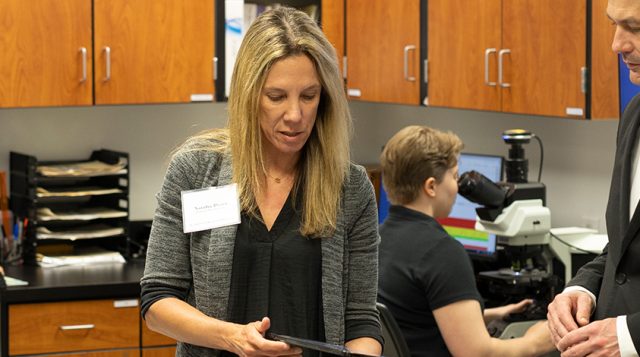
    Every season, new cultivars, more of them with dark green pod color, are showing in the market and evaluating their adoption to local growing conditions became a tradition for the Miami-Dade County vegetable extension agent. These replicated variety trials are always conducted in growers fields under commercial production practices. Field Days, organized before harvest, have always had a very good attendance, usually between 30-50 people including farmers, seed companies’ representatives and Ag. suppliers (Fig.1). In the 2003/2004 growing season, two trials were conducted with the same cultivars planted in replicated trial in the winter and spring. Dates of planting were: December 18, 2003 and March 4, 2004. In the first trial, cultivars ‘Dusky’, ‘Ambra’, ‘Capricorn’, ‘Thoroughbred’, ‘Charon’ and ‘Caprice’ were compared with traditional ‘Opus’ and ‘Leon’. In the second trial the new cultivar ‘Greenback’ was added to the list.
    To obtain yield data, plants from 10 foot sections of each plot were removed, and then all pods were separated and graded according to industry standards. Twenty randomly picked pods from each cultivar were used for quality evaluation including size, shape, seed development and of course pod color (Fig. 2).
    During the cooler winter months ‘Leon’ was the highest yielding cultivar with 245 boxes/acre followed by ‘Dusky’ and ‘Opus’ with 203 and 198 boxes/ acre respectively. In the second trial, ‘Ambra’ was the highest yielding cultivar with 385 boxes/acre followed by ‘Dusky’ with 335 boxes/acre and ‘Greenback’ with 300 boxes/acre.
    Full results from these two trials will be published in the 2004 Florida State Horticultural Society Proceedings expected to be published in the spring of 2005.
    The question about darker green bean cultivars suitable for planting at different planting windows in south eastern Florida was answered by “Dusky”. This dark green bean with good quality pods, small seeds, and attractive dark color of pods yielded very well in both trials and has potential to become a new “dark bean” for Homestead growers (Fig. 3).


(Teresa Olczyk, Miami-Dade County, ext. agent - Vegetarian 04-11)