Vegetarian, 05-08 / August 2005
August is Vegetable Time for Florida Residents
by Tom MacCubbin, Orange County Extension Service
This article contains some summer gardening tips from some of Florida 's most avid gardeners and gardening supply store owners.
After moving to Florida over thirty years ago, Garland Holt knew he wanted to grow a vegetable garden. He likes to see things grow and the garden provides a lot of enjoyment. But, there is yet another reason.
"I love the taste of the fresh vegetables," says Holt. "It's not the same from the store."
At 76 years old he is getting ready for the warm season ahead; planting time starts around mid August. Until then, there is tilling of organic matter to improve the soil and solarization of the bare ground using a covering of clear plastic to bake out the pests. He is also starting some new transplants from seed (Table 1).
"Gardeners often have a tough time getting acclimated to the Florida climate," says Holt, a former South Carolina resident. The thought of starting a warm-season garden at this time of the year may seem unusual. But if you start early, there are nine months of great gardening ahead.
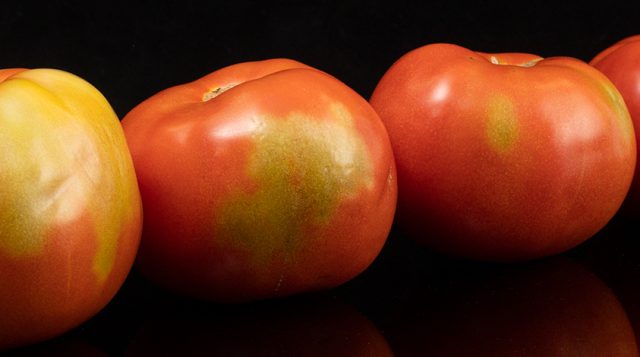
Some crops, such as tomatoes, need an extra head start. Plants added to the garden in August start to flower in September and produce ready-to-eat fruit by November. "An early start is important" says Linda Sapp, owner of Tomato Growers Supply Company in Fort Myers , Fla. It ensures a crop before the really cold weather.
"You don't want to go to all the trouble and then get frost," she adds.
Sapp suggests some additional crops for warm season plantings including peppers, eggplant, cucumbers, and squash. When planting during late summer, she suggests looking for varieties that are the most disease resistant.
"There is so much heat and humidity at this time of the year that diseases are really happy here. Anything that helps the plantings withstand disease is nice," says Sapp.
Tomatoes with good disease resistance that won't mind the hot weather include 'Florida 91', 'Solar Set', and 'Sun Chaser'. Sapp says all are determinate types that fruit rapidly on low growing vines but only for a short period of time. Topping her list of indeterminate, taller-growing tomatoes that can fruit for months are 'Big Beef', 'Better Boy' and 'First Prize'.
When looking for peppers, Sapp told us that the variety 'Revolution' has some resistance to fungus, bacteria, and virus problems. It produces a blocky and wide pepper (over four in. long) that is just right for stuffing. Another favorite is 'Big Early' growing to 8 in. long and 4 in. wide with a sweet taste - it only takes one to make a meal. All peppers grow best in an organic matter-enriched soil and frequent feedings are necessary for best fruit production.
Now, you might be thinking of a spot where you can grow a garden. You don't need a lot of room; any sunny area of the landscape can grow vegetables. Do not be afraid to mix these edibles with flowers, shrubs, and even ground covers. In fact, Chris Hall, owner of Hall's Garden and Pet Supply in Orlando , Fla. , says it is best to start small with a 10 ft. x 6 ft. home garden. He adds, "It grows lots to eat and some to share with friends."
Another important tip is to grow what your family likes. Hall says tomatoes are the most popular vegetable but many gardeners are planting and enjoying collards and similar greens also. Other crops that are sure to please include snap beans and onions.
According to Hall, getting a good start on the season includes improving the soil. He advises new and experienced planters to work in lots of organic matter with the sandy sites. Adding manure, compost, peat moss, and similar materials help these soils hold water and they also supply some nutrients for growth.
"It takes a while to create a suitable soil," says Hall. "But when you get the soil in good shape, gardening is easier."
All our experts suggest making frequent visit to the garden. "Go out every day to see what's happening and address the issues as needed," says Linda Sapp. "Frequent visits are just part of good gardening care" adds Chris Hall.
Here are a few more tips to ensure a good harvest.
- Water as needed to keep the soil moist. New plantings may need daily watering until roots begin to grow out into the surrounding soil. Thereafter, water as necessary to prevent wilting.
- Add a 1-2 in. mulch of hay, chipped bark, or grass clippings to help reduce weeds, conserve moisture, and keep vegetables free of sand.
- Feed plantings every 2 to 3 weeks with a general garden fertilizer or manure until fruiting begins or until it's harvest time for leafy crops.
- Use pesticides sparingly. Many insect can be hand picked and destroyed or washed off the plant portions at harvest time. Select natural pesticides if sprays are needed.
A late-summer, warm-season garden is just the start of many months of great plantings. As some of the crops start to mature, cool season plantings can be added in October and new warm-season plantings in early March.
"This is a time when you can get back outside and enjoy growing something," says Linda Sapp. "The weather will start getting even more pleasant as you head into fall."
Table 1. Suggestions for Late-Summer, Warm-Season Planting.
| Vegetable |
Planting Method |
Spacing (in.) Between Plants |
Difficulty |
Comments |
| Beans, bush |
Seed |
2-4 |
Easy |
Usually a family favorite |
| Broccoli |
Transplants |
12-18 |
Easy |
May need staking |
| Cantaloupe |
Seed or transplants |
24-36 |
Difficult |
Needs lots of room or trellis |
| Collards |
Seed or transplants |
10-18 |
Easy |
May need staking |
| Corn |
Seed |
12-18 |
Medium |
Plant in clusters |
| Cucumber |
Seed or transplants |
12-24 |
Easy |
Grow on a trellis |
| Eggplant |
Transplants |
24-36 |
Easy |
May need staking |
| Okra |
Seed |
6-12 |
Easy |
May need staking |
| Onions |
Seed or transplants |
4-6 |
Easy |
Use sets for fresh onions |
| Peas, southern |
Seed |
2-3 |
Easy |
Plants tend to ramble |
| Pepper |
Transplants |
12-24 |
Medium |
May need staking |
| Pumpkin |
Seed |
36-60 |
Difficult |
Needs a lot of room |
| Summer squash |
Seed or transplants |
24-36 |
Medium |
Use bush types |
| Tomato |
Transplants |
18-24 |
Easy |
Needs a trellis or stake |
| Watermelon |
Seed or transplant |
24-36 |
Difficult |
Needs lots of room or tellis |
Contributing Extension Specialists
Daniel J. Cantliffe
Professor and Chair |
Mark A. Ritenour
Associate Professor, postharvest |
Kent Cushman
Assistant Professor, vegetable production |
Steven A. Sargent
Professor, postharvest |
Chad M. Hutchinson
Associate Professor, vegetable production |
Eric H. Simonne
Associate Professor and SCIENTIFIC EDITOR, vegetable nutrition |
Yuncong Li
Associate Professor, soils |
William M. Stall
Professor, weed science |
Stephen M. Olson
Professor, small farms |
Danielle Treadwell
Assistant Professor, organic/sustainable production |
Rafael Munoz-Carpena
Assistant Professor, hydrology |
James M. White
Associate Professor, organic farming |
|