Vegetarian Newsletter

A Vegetable Crops Extension Publication

University of Florida
Institute of Food and Agricultural Sciences
Cooperative Extension Service

Vegetarian 99-10
October 1999


VEGETABLE CROPS CALENDAR

COMMERCIAL VEGETABLES

VEGETABLE GARDENING


(Note: Anyone is free to use the information in this newsletter. Whenever possible,
please give credit to the authors. The purpose of trade names in this publication is
solely for the purpose of providing information and does not necessarily
constitute a recommendation of the product.)

Florida State Horticultural Society. October 31 - November 2, 1999. Indian River Plantation Marriot Resort, Stuart, FL. (561) 225-3700.

Southeast Vegetable and Fruit Expo. December 13-15, 1999. Joseph S. Koury Convention Center, Greensboro, NC. Contact: Bonnie Price Holloman (919)772-2204.

Australian Vegetable Tour. January 7-10, 2000. Contact: Dr. Doug Sanders, NC State University (919) 515-1222, E-mail: Doug_Sanders@NCSU.edu

2000 Florida Postharvest Horticulture Institute and Industry Tour.
Institute - March 6th, University of Florida, Gainesville, with video-links to several sites in Florida.
Industry Tour - March 7-10th Statewide
For more information contact: Steve Sargent, (352) 392-1928 ext. 215, e-mail or Abbie Fox (352) 392-1928 ext.235, fax (352) 392-5653, e-mail


Suspension of the Watermelon Crop Insurance
    Program for the Crop Year 2000

    What started out as a worthy program by the Federal Crop Insurance Corporation (FCIC) has turned into an unmanageable nightmare in some areas of the state. Lofty goals were set to provide a safety net for watermelon growers to pay back out-of-pocket costs for crops which might be ravaged by the forces of nature. Alachua, Jackson, and Manatee counties in Florida were selected to be "pilot counties" in 1999 to give this program a trial.

    As it turned out, the policies were loosely written regarding what production practices were considered important for the grower to use, and no consideration was made as to the irrigation, fertilization, and previous cropping history of the land and present watermelon crop, making it evident that the FCIC had not consulted any university personnel. Growers in Jackson and a few other counties found that it was almost an open invitation to overproduce, and several disregarded proper cultural and management practices. The acreage planted here in spring 1999 exceeded 9,000 acres, compared to the previous 20-year high of 1,600 acres planted for a spring crop. The fall 1999 crop is now estimated at 6,000 acres, compared to about 800 acres maximum planted in the past 10 years.

    To make a long story short, after two hearings were held, and several complaints were made, the FCIC suspended the crop insurance program for watermelons for the year 2000. Industry members had said that the insurance program led to oversupply of watermelons and low prices. The announcement to this effect was made on 13 September, 1999. The sixty-day comment period began on that date, and written comments regarding the Watermelon Crop Insurance Program may be submitted no later than 12 November, 1999, to these contacts:

Stamp Mail Address:
Director
Research and Evaluation Division
Federal Crop Insurance Corporation
United States Department of Agriculture
9435 Holmes Road
Kansas City, MO 64131

Internet Address: DIRECTORPDD@RM.FCIC.USDA.GOV

For further Information:
Contact is Kathy Tiefel, Insurance Management Specialist, Research and Development Division, FCIC, at the address listed above. Ms. Tiefel’s telephone number is 816-926-6343.

(Charles L. Brasher, Extension Agent III, Jackson County, Vegetarian 99-10)


New Horticulturist at the GCREC-Dover

    I would like to take this opportunity to introduce myself, John R. Duval. I was born and raised just east of Stone Mountain, Georgia. I grew up growing Christmas trees on my family's choose-and-cut operation. I began running the farm when I was sixteen and continued running it until I finished my Bachelor's degree in Landscape and Grounds Maintenance at the University of Georgia (1993). I then went to Texas A&M University to pursue a Master's degree in Horticulture specializing in vegetable crop production under the direction of Dr. Frank J. Dainello. My work in Texas allowed me to gain experience with a multitude of vegetable crops (squash, muskmelon, watermelon, spinach, tomatoes, turnips, and mustard greens). After completing my Masters degree in 1996, I returned to UGA and completed my Ph.D. (1999) under the direction of Dr. D. Scott NeSmith. My research there concerned improving stand establishment of triploid watermelon.

    As the newest member of the GCREC-Dover faculty, I am looking forward to working with the Florida strawberry industry. Currently, I am conducting experiments with strawberry that include factors such as, transplanting date, mineral nutrition, root mass and geometry at planting and several new chemicals to enhance strawberry production. I look forward to meeting more growers and having a productive and educational first season.

(Duval, Vegetarian 99-10)


Lettuce Cultivars for Warm Seasons

    A non-replicated lettuce variety trial was conducted during the early summer of 1999 at the Suwannee Valley REC near Live Oak, FL. The trial was conducted to evaluate several cultivars for bitterness in the hot season. Specialty lettuces are very popular at restaurants and local retail markets, especially community farmer’s markets. Many cultivars produce high yield and excellent quality during the cool season in North Florida. However, as temperatures increase several cultivars become very bitter resulting in unmarketable product.

    This trial was conducted in a Lakeland fine sand using a full-bed white-on-black polyethylene mulch and drip irrigation system of production. The final beds were 36 in. wide and 6 in. high. Four-week-old transplants were used to establish the plots on May 5, 1999. Each bed contained two rows 12 in. apart and plants were spaced 12 in. within each row.

    Samples were harvested from each plot on June 7, 1999. The same two people rated each sample on a 1-5 scale with 1= no bitterness and 5= very bitter (Table 1). A rating of 4 or 5 would determine the cultivar to be unmarketable due to bitterness alone. Ratings of 1 or 2 would determine those cultivars to be of excellent quality and marketability in relation to bitterness.

    In general, all butterhead cultivars (‘Ermosa’, ‘Carmona’, and ‘Red Rouge’) were all very mild in flavor with very little or no bitterness. The only lollo type cultivar, ‘Lollo Rosa’, was very bitter. Other types of lettuce (looseleaf, oakleaf, and romaine) were more variable depending on cultivar (See Table 1).

    This trial demonstrated several cultivars of specialty lettuces can be grown well into the summer in North Florida to extend the marketing season. Cultural practices including the use of white-on-black polyethylene mulch may be important in extending the lettuce season.

Table 1. Bitterness ratings for several cultivars and types of lettuce grown in the early summer of 1999 near Live Oak, FL.
Cultivar

Type

Color

Bitterness Ratingz

Black Seeded Simpson

Loose

Green

3

Redina

Loose

Red

5

Two Star

Loose

Green

2

Waldmans Dark Green

Loose

Green

4

Lollo Rosa

Lollo

Red edges

5

Red Rouge

Butterhead

Red

2

Ermosa

Butterhead

Green

1

Carmona

Butterhead

Red

1

Cerize

Oakleaf

Red

2

Saladbowl

Oakleaf

Green

2

Red Saladbowl

Oakleaf

Red

3

Royal Oak

Oakleaf

Green

3

Cocarde

Oakleaf

Red tint

2

Kalura

Romaine

Green

2

Rosalita

Romaine

Red tint

2

Paris Island

Romaine

Green

3

Rouge D’hiver

Romaine

Red tint

3

Medallion

Romaine

Green

2

Z = Bitterness ratings were given on a scale of 1-5; 1=no bitterness, 5=very bitter.

(Robert Hochmuth, Multi County Extension Agent, Suwannee Valley REC, Vegetarian 99-10)


Field Production of Specialty Tomato
   Varieties in Southeast Florida

    Fruit and plant characteristics of 10 specialty tomato varieties were evaluated at three farms in Southeast Florida during the winter/spring season, 1998-99. The tomatoes were grown on sandland using fumigated (methyl bromide/chloropicrin) full-bed plastic mulch culture and sub surface seepage irrigation. At the first farm, transplants were set December 3, 1998 and varieties were evaluated on March 10 (98 days after transplanting). Beds were on 6' centers and plants were set at three different within-row spacings: 24, 36, and 48 inches (3,630; 2,420; and 1,815 plants/A, respectively). At the second location, transplants were set on January 15 and evaluated on April 26 (101 days after transplanting). Beds were on 6' centers and plants were set at a 33 inch within-row spacing (2,640 plants/A). At the third farm, tomatoes were transplanted on February 3, 1999, and evaluated on May 4 (90 days after transplanting). Plants were set on 5' centers and at a 24 inch within-row spacing (4,356 plants/A). Plant and fruit descriptions for the first demonstration are in Table 1. Tomato plant and fruit characteristics for the second and third demonstrations were averaged and presented in Table 2. Varieties are listed in order from the smallest sized fruit to the largest sized fruit. Results of a taste test conducted for four of the grape/cherry varieties from the third demonstration are in Table 3.

Table 1. Plant and fruit descriptions for specialty tomatoes in a variety demonstration, Alderman Farms, Boynton Beach, FL, 1998-99.z

Variety

Seed source

Type

Fruit shape

Plant typey

Observations

Mini Charm

Seedway

Grape

Round

Indet

Fruit on a cluster. Good fruit set. Reddish orange to red. OK for 36" within-row spacing. Some single growth splits extending halfway across fruit.
Santa

Seedway

Grape/plum

Indet

Fruit on a cluster. OK fruit set, could be heavier. Orangish red to red. OK for 36" within-row spacing.
Juliet

Seedway

Mini roma

Plum

Indet

May be too large as a grape. OK to good fruit set. Orange/red to red & red/orange. Vigorous plant. 36" within-row spacing recommended.
Sweet 100

Seedway

Cherry

Round

Indet

Fruit on a cluster. Good fruit set. Reddish orange to red. OK for 36" within-row spacing. Mature fruit did not stay attached well and fell off clusters easily.
844417

Western Seed

Cherrycluster

Round

Indet

Fruit on a cluster (slightly large for a cherry). OK fruit set. Orangish red to reddish orange. Vigorous plant. 36" within-row spacing recommended. Moderate radial cracking around fruit. When ripe, fruit detaches easily; might break off too easily from cluster when picked.
Durinta

Western Seed

Cluster

Round

Indet

Round, slightly squatted fruit. 5-6 fruit/cluster. 24 - 30" within-row spacing should be enough, 36" may not be needed.
862978

Western Seed

Plum, orange

Plum

Deter

Light orange; some darker fruit is reddish orange. Good fruit set; medium yield. Solid, not pithy or hollow. Determinant plant; 24" within-row spacing recommended.
z Transplanted December 2, 1998, 98days to evaluation of mature fruit. Nectar, Campari, and Triton were not planted at Alderman Farms; they all had round fruit.
y Deter = determanate. Indet = indeterminate


Table 2. Whitworth Farms, Boynton Beach, and Thomas Produce, Fort Pierce, FL, Winter/Spring 1999.z
Variety

Seed source

Type

Fruit/
clustery

Fruit wt. (gms)x

Mature (red) fruit wt. (gms)w

Fruitlgth x width (inches)v

Ratiol x wv

% red fruit

% green fruit

% cracked

Plant height inchesu

Mini Charm

Seedway

grape

16.3

5.7

6.5

0.90 x 0.87

1.03

75%

16%

0.5%

63

Santa

Seedway

grape

15.9

7.9

8.4

1.38 x 1.04

1.33

66%

25%

0.6%

53

Sweet 100

Seedway

cherry

13.6

8.0

9.2

0.92 x 0.95

0.97

69%

21%

3.3%

56

Nectar

Enza

cherry

11.4

12.9

13.9

82%

12%

0.8%

45

844417

Western Seed

cherry cluster

15.9

13.0

16

1.18 x 1.28

0.92

51%

28%

6.8%

57

Juliet

Seedway

mini-roma

9.4

21.6

24.2

1.68 x 1.23

1.37

71%

22%

0

54

Campari

Enza

cluster

9.5

46.2

51.7

75%

18%

0.6%

48

Triton

Enza

cluster

7.5

83.4

91.7

57%

36%

0.7

58

Durinta

Western Seed

cluster

7.1

100.7

107.3

2.10 x 2.45

0.86

65%

26%

0.7

44

862978

Western Seed

orange plum

--

86.5

2.55 x 2.12

1.20

9.5

26

z Whitworth Farms transplanted January 15, 1999, and evaluated April 26, 1999 (101 days after transplanting). Thomas Produce transplanted February 3 and evaluated May 4, 1999, (90 days after transplanting).
y Whitworth Farms, fruit from 4 to 9 clusters per variety. Thomas Produce, fruit from 10 to 14 clusters per variety.
x Weight of all fruit along with the stems holding the clusters.
w Only fruit weight; stems not included.
v Measurements taken from Alderman Farms demonstration, March 10, 1999. Ten fruit per variety. Nectar, Campari, and Triton were not planted at Alderman Farms.
u Top of bed to top fruit.


Table 3. Results of a taste test conducted for four grape/cherry varieties, May 5, 1999.z
Variety

Seed source

Type

Preference y

Sweetness x

Blandness x

Acidic x

Mini Charm

Seedway

grape

3.00

3.00 (10)

2.50 (2)

2.33 (3)

Santa

Seedway

grape

2.87

2.44 (9)

2.33 (3)

2.67 (3)

Sweet 100

Seedway

cherry

2.53

2.43 (7)

2.40 (5)

2.25 (4)

Nectar

Enza

cherry

2.53

2.83 (6)

2.00 (6)

2.33 (3)

z Participants were given two tomatoes of each variety to taste. Red ripe fruit which had been picked on May 4 was washed and stored at room temperature.
y Participants were asked to rank varieties in order of preference. Rating scale: 4=most preferred to 1=least preferred. ( )= total number of responses.
x Participants were asked to rank varieties. Rating scale: 4=sweetest, blandest, or most acidic, respectively. ( )= total number of responses for each variety.

(Shuler, Extension Agent IV, Palm Beach County, Vegetarian 99-10)


Vegetable Gardening

Horticulture Events at 1999 4-H Congress

A. Horticulture events at 1999 4-H Congress (See corrected list of Judging winners).

Our 4-H horticulture committee composed of Bob Black, Jeff Williamson, and myself conducted three plant science events for the 4-H’ers at Gainesville during State Congress, the week of July 26-30, 1999. The following are the results.

1. Horticulture Leadership Track. We provided two days of classes on various topics related to horticulture. Some of the class topics covered such things as: writing a garden record book; lawn mower safety; plant bonsai; insect eating plants; container culture; lake watch; and butterfly gardening. Over 40 4-H members attended. State 4-H specialist Joy Jordan assisted us with this event. Instructors were agents Zerba, Landrum, Fedunak, and Renner, with specialists.

2. Plant Demonstrations. Both team and individual demonstrations were heard and judged by Heather Miller, Mark Gal, and Jackie Host.

Plant Demonstration Results:
Placing

Name

County

Subject

1 Pebbles Fullford Marion Hydroponics
2 Jackie Lundy Glades Sugar bill
3 Kyle Smith Osceola Propagation
4 Travis Nettles Suwannee Cold frames
5 Crystal Baker and Tariea Cox Marion Reproduction

Awards trip: Pebbles Fullford was selected to represent Florida 4-H at the national competition at the NJHA convention, Tampa, Nov. 5-6, 1999.

3. Horticultural Identification and Judging.

Placing

Score

Name

County

1

840

Alicia Kamholtz

Marion

2

796

Dustin Taylor

Marion

3

790

Gary Hodges

Duval

4

784

Leah Warner

Marion

5

749

Elizabeth Stutsman

Duval

6

690

Melissa Gonzalez

Hendry

7

631

Angela Staines

Marion

8

610

Adam Bechtel

Hendry

9

531

Roy Dutcher

Hendry

10

520

Alayne Clark

Duval

11

512

Malachi Toth

Charlotte

12

508

Wendy Kirkland

Hendry

13

481

Christina Toth

Charlotte

14

343

Jacque Maxwell

Volusia

15

337

Elliot Balo

Volusia

16

326

Joshua Bell

Charlotte

17

284

Jared Weaver

Duval

18

270

Anna Mattson

Volusia

19

225

Christina Scalzo

Volusia

Marion County team was selected to compete at NJHA convention in Tampa in November. Duval County placed second, followed by Hendry, Charlotte, and Volusia.

(Stephens, Vegetarian 99-10)

Cool-Season Vegetables for Florida Gardens

    The cool-season vegetables are those of which the primary parts eaten are the vegetative parts– roots, leaves, buds, or immature flower parts. That is a general rule, for there are exceptions : sweet potato roots and New Zealand spinach tops are warm-season, while pods of English peas and broad beans are cool-season vegetables.

    According to Knott’s Handbook for Vegetable Growers, there are some major ways cool-season vegetables differ from the warm season vegetables ( some exceptions do occur):

1. They are cold hardy or frost-tolerant.

2. Seeds germinate at cooler soil temperatures.

3. Root systems are more shallow.

4. Plant size is smaller.

5.They respond more to nitrogen fertilizer.

6. They must be watered more frequently.

7. Some are susceptible to pre-mature seed stalk development.

8. Most are stored at or near 32 degrees F (except potato); sweet corn is a warm-season exception that is also stored at 32F. Many warm-season vegetables suffer chilling injury between 32 and 50 F.

9. Some seeds like lettuce and celery are favored by light at germination.

10. For some cool-season crops like asparagus, very cold temperatures induce dormancy and re-growth.

List of Cool-season Vegetables (Source: Knott)

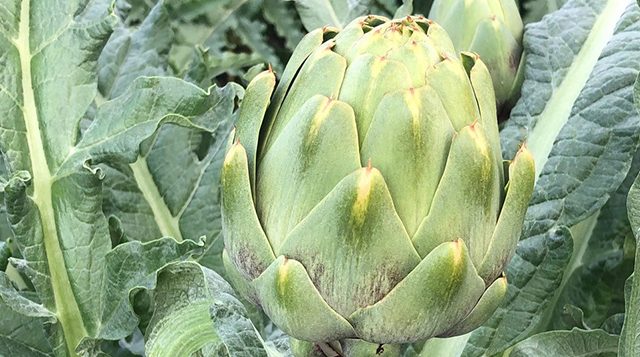
Artichoke, globe

Chard, Swiss Kohlrabi Shallot
Artichoke, Jerusalem Chicory Leek Spinach
Asparagus Chinese cabbage Lettuce Turnips
Bean, broad Chive Mustard Watercress
Beet Collard Onion
Broccoli Corn salad Parsley
Brussels sprouts Cress Parsnip
Cabbage Dandelion Pea, English
Cardoon Endive Potato
Carrot Florence fennel Radish
Cauliflower Garlic Rhubarb
Celery Horse-radish Rutabaga
Celeriac Kale Salsify

    Planting dates for cool-season vegetables in Florida Some of these crops can be planted as temperatures approach the proper range. Cool-season crops grown in the spring must have time to mature before temps are too warm. In the fall they can be started in warm weather if they mature when it is cooler. However, if seeds are germinated in the garden, they must have cool enough soil temperatures for sprouting properly.

    There is a fairly wide range of soil temperatures for seed germination, from about 40-80 degrees F. for lettuce to 60-105 degrees for turnip and 50-70 degrees for parsnip and 50-85 for parsley. Notice the overlapping with some of the warm-season crops like watermelon at 70-95 degrees. Gardeners should be advised to follow the suggested planting dates in the Florida Planting Guides for their section of the state. It is possible and practical to have a winter-time garden anywhere in Florida.

(Stephens, Vegetarian 99-10)


Extension Vegetable Crops Specialists

Daniel J. Cantliffe
Professor and Chairman, Horticultural Sciences Department
Mark A. Ritenour
Assistant Professor

Timothy E. Crocker
Professor

Ronald W. Rice
Assistant Professor
John Duvall
Assistant Professor
Steven A. Sargent
Professor
Betsy M. Lamb
Assistant Professor
William M. Stall
Professor
Yuncong Li
Assistant Professor
James M. Stephens
Professor and Editor
Donald N. Maynard
Professor
Charles S. Vavrina
Associate Professor
Stephen M. Olson
Professor
James M. White
Associate Professor


This page is maintained by Susie Futch.... if you have any questions or comments, contact me at zsf@ufl.edu